Lion’s Mane, lion’s mane mushroom, Hericium erinaceus — same mushroom?
Lion’s mane, Hericium erinaceus and the hedgehog mushroom are one species. What actually differs is the product — and how to check it before you buy.
Contents
- One mushroom, a dozen names
- One name, different products
- Raw material: fruiting body, mycelium, or mycelium with grain
- Format and extraction: liquid, powder, capsules
- Five checks before you buy
- Red flags on marketplaces
- What we make under this name
- Is yamabushitake the same mushroom?
- Is the “hedgehog mushroom” a different species?
- Does a cheap “lion’s mane” differ from an expensive one?
- One name is enough
Yes, it is the same mushroom. Lion’s Mane, lion’s mane mushroom, Hericium erinaceus, the hedgehog mushroom, bearded tooth, yamabushitake — all of these names point to one species, a white fungus that grows on hardwood and hangs down in a cascade of soft spines. Whichever of them you typed into a search box, you were looking for the same thing. What genuinely differs is not the mushroom but the product made from it, and that difference decides what ends up in your bottle. Below: where all these names came from, how products under one name diverge, and a short checklist for buying without guessing.
One mushroom, a dozen names
The Latin name was fixed by the mycologist Persoon in 1797: Hericium erinaceus. Bulliard had described the same mushroom earlier, in 1781, under the name Hydnum erinaceus, which is why the full scientific citation reads “Hericium erinaceus (Bull.) Pers.” — first the author of the original description, then the author of the current combination. You can trace this chain in the Index Fungorum nomenclature database. And here is the detail that explains half the nicknames: both parts of the Latin name refer to the hedgehog. German speakers went the same way and call it Igel-Stachelbart, “hedgehog goatee”. One look at the fruiting body — a dense white ball of hanging needles — and the hedgehog comparison needs no defence.
English went with a bigger animal: lion’s mane, because the same cascade of spines reads as a mane. The same mushroom is also called bearded tooth, bearded hedgehog and pom pom. Japan contributed yamabushitake, “the mountain ascetic’s mushroom” — the shaggy robes of the yamabushi monks were said to resemble it. China contributed hóutóugū, “monkey head mushroom”. Russian settled on ежовик гребенчатый (comb hedgehog) as the scientific name, with гериций гребенчатый as a transliterated variant and folk names like грибная лапша, “noodle mushroom”, and дедова борода, “grandfather’s beard”.
Where did львиная грива in Russian come from? It is a loan translation of lion’s mane that arrived with imported supplements, first on labels, then in articles and marketplace listings. There was no older Russian tradition behind it, but the name stuck because it is vivid. Search engines index both names, sellers write whichever their audience types, and a single product page can use both in one paragraph. Even the scientific literature plays along: the best-known human trial of this mushroom, Mori and colleagues in 2009, is titled “Improving effects of the mushroom Yamabushitake (Hericium erinaceus)”. One species, three names in one title.
One name, different products
Here is the part that matters for your wallet. The species name on a label tells you which mushroom was used. It does not tell you what the product is. Two jars can both honestly say Hericium erinaceus and contain things that barely resemble each other, because three independent choices stand between the mushroom and the shelf: which material was grown, how it was processed, and in what form it is sold.
Raw material: fruiting body, mycelium, or mycelium with grain
The mushroom has two usable parts. The fruiting body is the visible white structure with the spines. The mycelium is the thread-like network the fungus grows before it fruits. Research draws a chemical distinction between them: the hericenones were found in fruiting bodies, while the erinacines — including erinacine A, the compound most discussed in connection with nerve growth factor — come from the mycelium. A third variant complicates the picture: mycelium grown on grain, dried and milled together with the grain. That product is a mixture of fungal biomass and leftover substrate, which is not the same thing as separated mycelium. We unpack this question in a separate guide; the short version is that “mycelium” on the label is the beginning of the answer, not the answer.
Format and extraction: liquid, powder, capsules
Powder is a physical form, not a processing method: it can be raw mushroom that was simply dried and milled, or an extract that was dried afterwards. A capsule is only a container around either of those. A liquid extract means the soluble compounds were deliberately pulled out of the raw material with a solvent. And here the method matters twice, because the compounds of Hericium do not all dissolve in the same liquid: the beta-glucans go into hot water, while a good part of the terpene fraction needs alcohol. Dual extraction runs both phases and recombines them; a water-only or alcohol-only preparation captures half of the picture. The ratio “10:1” on a label is not self-explanatory either — it says something was concentrated tenfold, without saying what was measured or how. None of this is visible from the photo of the jar.
Five checks before you buy
1. The Latin name. Look for Hericium erinaceus on the label or in the composition. It is the only name that cannot mean another mushroom: in English, “hedgehog mushroom” sometimes refers to Hydnum repandum, a different edible species altogether. The Latin binomial removes that ambiguity in one line.
2. The raw material. Fruiting body or mycelium — and if mycelium, on what was it grown, and is the growth medium removed? An honest label answers all three. “Mushroom biomass” with no further detail is a description designed to end questions, not answer them.
3. The processing. Was there extraction at all, and which — water, alcohol, or both? If the word “extract” appears, the next question is what the finished product actually contains: a solvent used during extraction does not have to remain in the bottle, and a powder does not have to be added to a liquid. These are checkable facts, not mysteries.
4. The composition and the instructions. What is in one serving, how much of it there is, and how to take it. “High in polysaccharides” without numbers and without saying what was measured is marketing filler, not composition data. A real instruction names a volume or a mass per serving.
5. The producer. Is there a named manufacturer with an address and contacts, and do they answer questions about the four points above? A producer who can tell you what was grown, how it was processed and what is in the bottle is worth more than any badge on the packaging.
Red flags on marketplaces
A few patterns repeat so reliably that they deserve their own list. An anonymous storefront with no producer named anywhere on the page. Stock photos of pristine mushrooms next to a jar with a generic label. “50% polysaccharides” with no test method, no specification of what was measured, and no document behind the number. Promises of treatment — “restores memory in a week”, “cures” — are not just enthusiasm: dietary supplements are not medicines, and regulators like the US FDA require exactly the opposite framing on honest labels. And a price at half the market level: growing a culture and running a two-stage extraction costs money, so a suspiciously cheap bottle raises a fair question — what was saved on?
What we make under this name
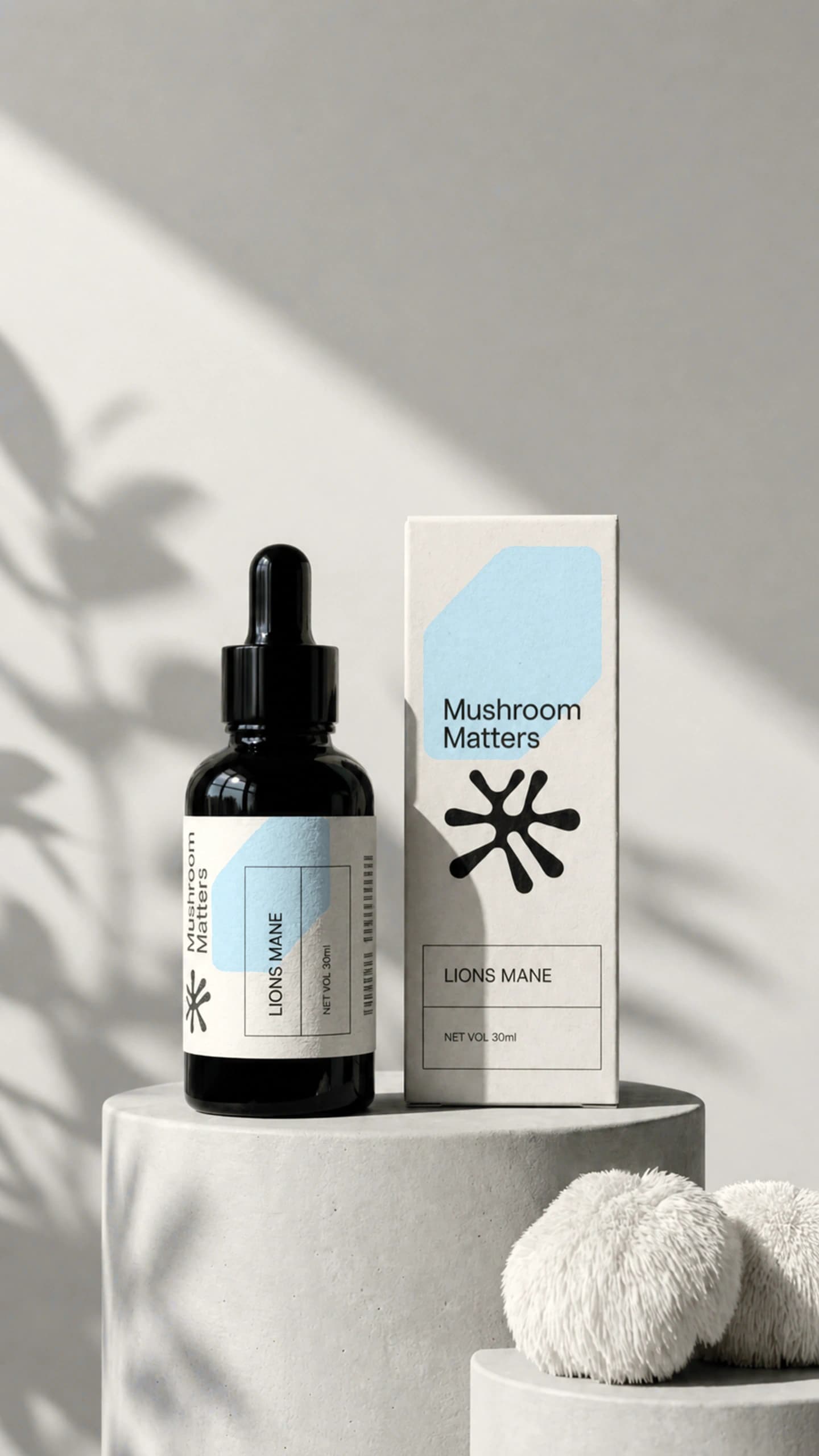
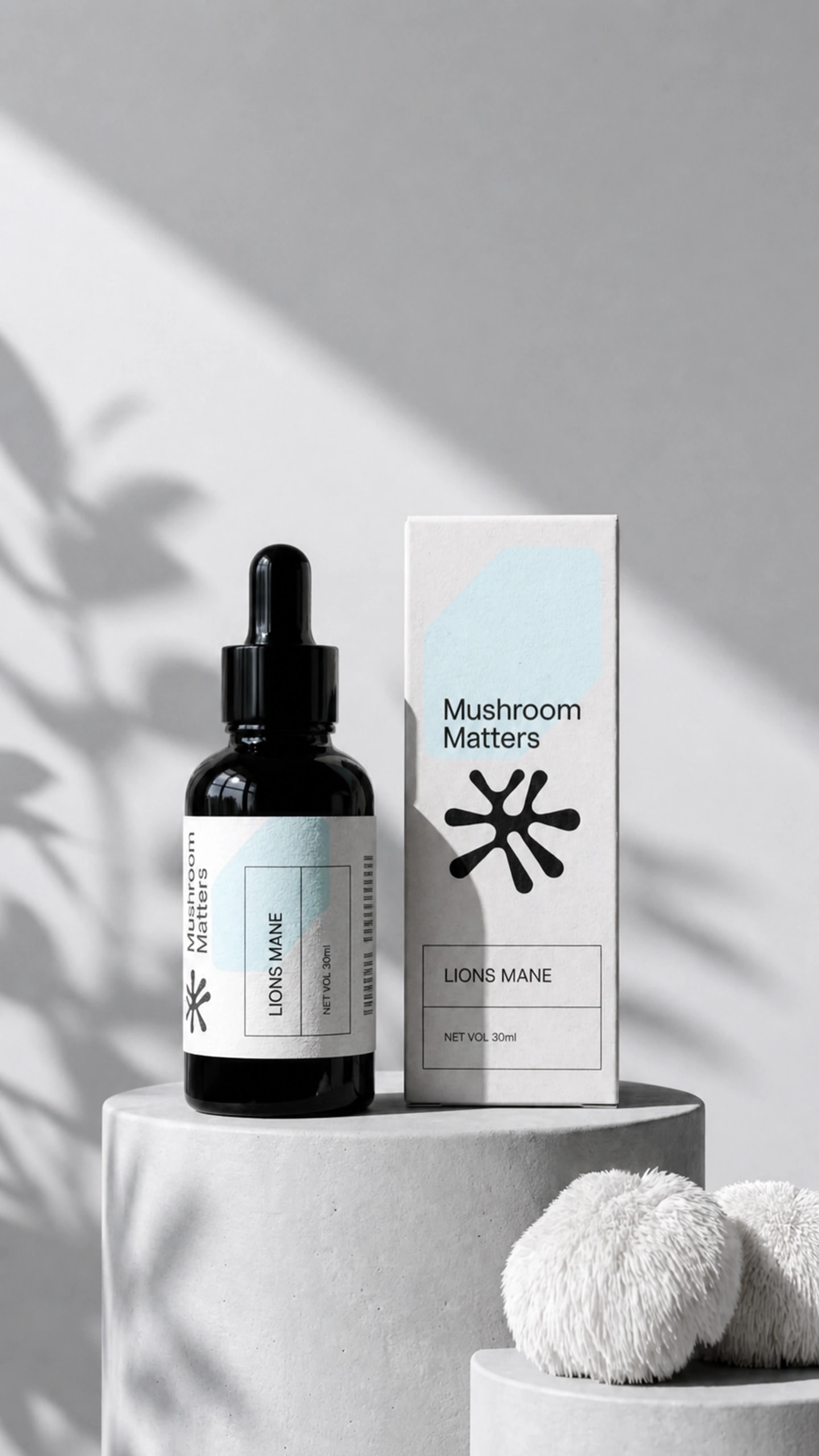
Our Lion’s Mane extract is made from Hericium erinaceus mycelium, which we grow ourselves without a grain substrate. Both extraction stages — hot water and alcohol — happen in our production in Yerevan; afterwards the solid residue is filtered out, the alcohol is removed, and no mushroom powder is added to the finished liquid. The extract is bottled in 30 ml amber bottles with a dropper, and the label directions are 1–2 ml once a day. Production is covered by an EAEU certificate of conformity. Whether the label says lion’s mane or ежовик, the Latin name stays the same — and in our case the raw material and the process are stated just as openly.
Is yamabushitake the same mushroom?
Yes. Yamabushitake is the Japanese name of Hericium erinaceus, and it matters for a practical reason: it is the name used in the best-known human trial. In that 2009 study, 30 Japanese adults with mild cognitive impairment took tablets of yamabushitake dry powder — four 250 mg tablets three times a day for 16 weeks. That is a small trial of one specific preparation, and its result applies to that preparation, not automatically to every product labelled lion’s mane, whatever the name.
Is the “hedgehog mushroom” a different species?
It depends on the language. In Russian, ежовик гребенчатый is precisely Hericium erinaceus — no ambiguity. In English, “hedgehog mushroom” is sometimes used for Hydnum repandum, a different edible mushroom with teeth under a more conventional cap, and even “bearded hedgehog” floats between the two. When you are comparing supplements rather than walking in a forest, the Latin name is the tie-breaker: Hericium erinaceus on the label settles it.
Does a cheap “lion’s mane” differ from an expensive one?
Possibly by nothing you could see in a photo, and possibly by everything that matters. The real differences — raw material, substrate, extraction — are invisible in the bottle. That is why the transparency questions above beat any price ranking. And when you do compare prices, compare the cost of a day of use according to each product’s own instructions, not the price of a bottle: a 30 ml bottle at 1 ml a day lasts thirty days, at 2 ml — fifteen.
One name is enough
Search for львиная грива, ежовик, lion’s mane or Hericium erinaceus — you will find the same mushroom every time. The question worth holding onto is not “which name is correct?” but “what exactly is in this bottle, and who answers for it?” A label that names the species, the raw material and the process is already most of the answer.
Read next
Sources
Comments
Leave a comment or ask a question.