Cordyceps: benefits, endurance research and how to take it
What Cordyceps militaris is, how it differs from wild cordyceps, what endurance studies show, and how to use and store the Mushroom Matters liquid extract.
Contents
- Militaris, not the caterpillar fungus
- Cordycepin: a molecule that looks like adenosine
- Why the resemblance is the point
- A quiet partner: pentostatin
- Energy that works with you, not over you
- What the trials actually show
- The effect builds; it does not switch on
- An honest caveat about the evidence
- Who tends to reach for it
- How to take and store Cordyceps extract
- Before the next session
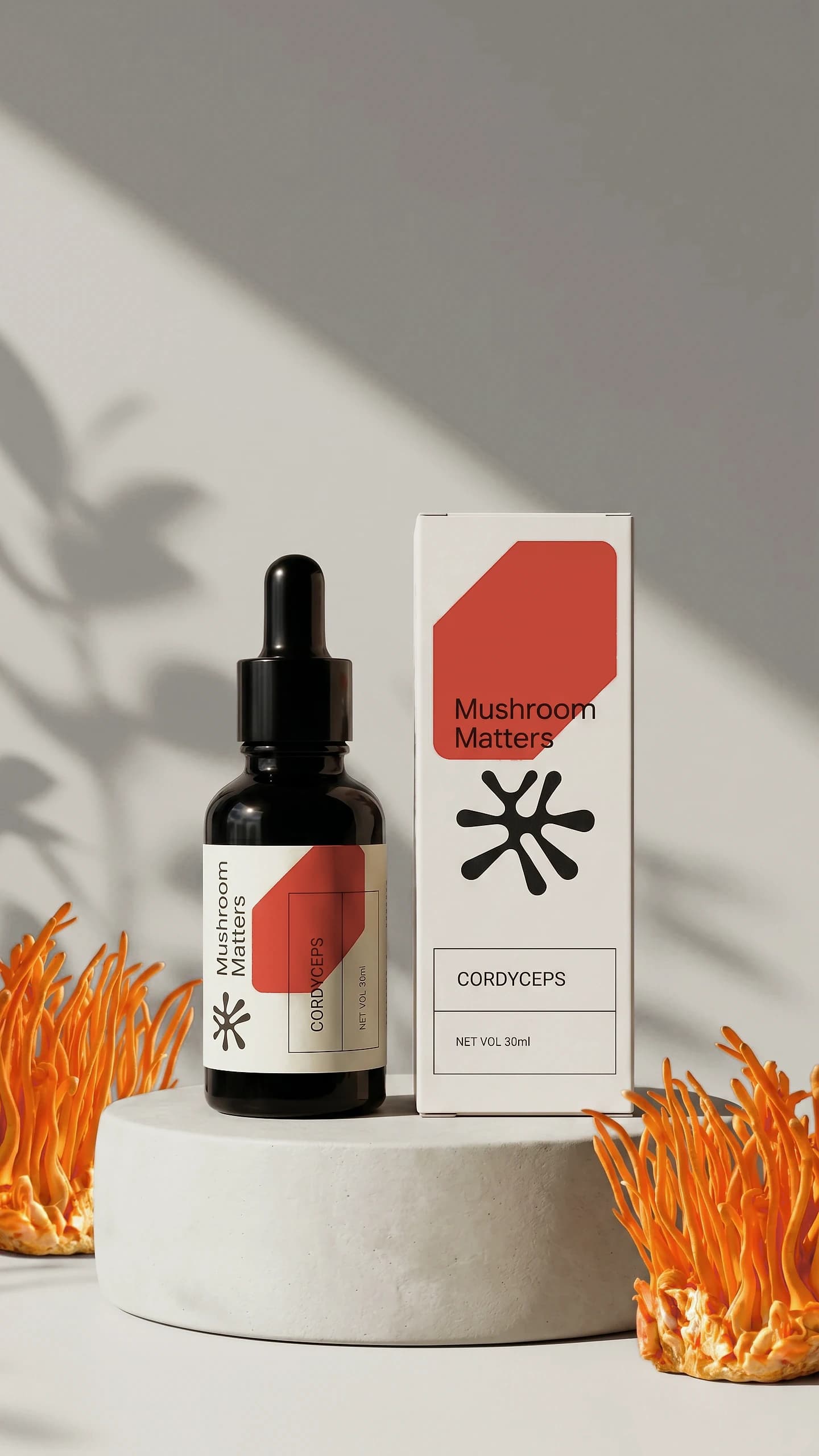
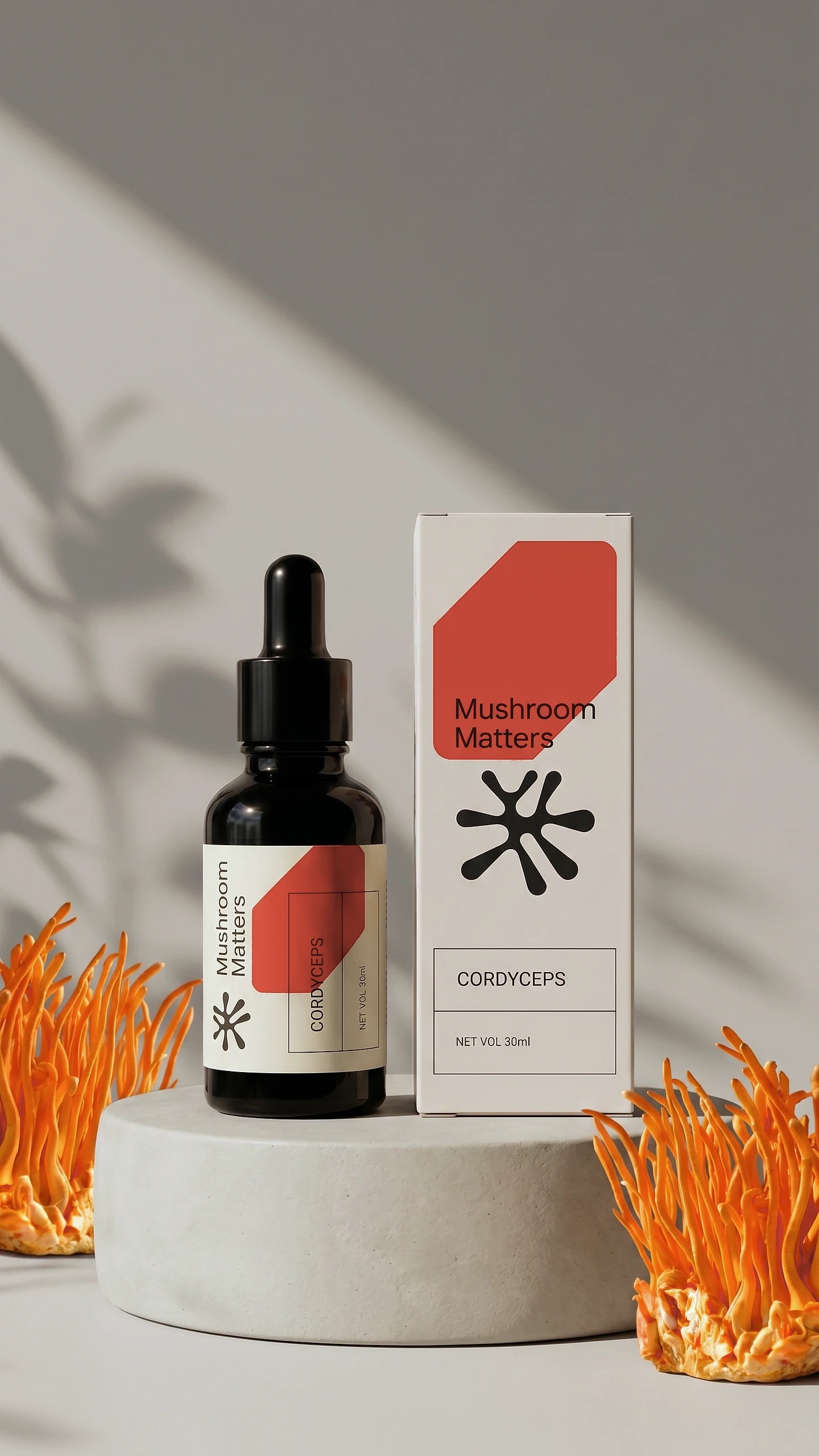
Our extract uses Cordyceps militaris. To understand claims about cordyceps and endurance, first check which species and preparation a study actually tested. Here we explain the distinction, the research on cordycepin and exercise, and the instructions for our liquid extract.
Militaris, not the caterpillar fungus
Two cordyceps get confused constantly. The wild one, Cordyceps sinensis (now often placed as Ophiocordyceps sinensis), grows out of caterpillars on the Tibetan plateau, is scarce, and reaches absurd prices. What we use is Cordyceps militaris, the type species of the genus, grown in a lab on a plant-based substrate with no insect involved. It is the vegan, traceable, consistent option. In the wild the same species is entomopathogenic and parasitises the caterpillars and pupae of moths and butterflies. Cultivation lets us skip that grim natural history and still get the compound that matters.
Cordycepin: a molecule that looks like adenosine
The active compound is cordycepin, chemically 3'-deoxyadenosine. It is a near-twin of adenosine, one of the building blocks of RNA and of the body's energy currency, and it differs by a single detail. Where adenosine carries a hydroxyl group at the 3' position, cordycepin carries a hydrogen instead (formula C10H13N5O3). That one swap is the whole story. It was first isolated from this mushroom and can now also be made synthetically, but the fungus remains its namesake source.
Why the resemblance is the point
Because cordycepin sits so close to adenosine, some enzymes cannot tell them apart. Slot cordycepin into a growing strand of RNA and, missing that 3' anchor point, the strand can stop early: premature termination of mRNA synthesis. That appears to be the weapon the fungus turns on its insect hosts. In us, the same family resemblance is why researchers keep circling back to cordycepin's links with cellular energy and oxygen use, though the human picture is far less settled than the insect one.
A quiet partner: pentostatin
There is a nice piece of chemistry behind the scenes. On its own, cordycepin would be picked apart quickly by adenosine deaminase, the enzyme that clears adenosine-like molecules. So the mushroom co-produces pentostatin, which blocks that enzyme and lets cordycepin build up instead of being degraded. It is a two-part system, and it is one reason the raw fungus behaves differently from a lone synthetic molecule in a tube.

Energy that works with you, not over you
The practical claim people make for cordyceps is energy without the jitter. Caffeine gives you lift by blocking adenosine receptors, so your brain stops registering fatigue for a while, then registers all of it at once when the block wears off. That is the crash. Cordycepin is not doing that. It is tied to the energy side of the metabolism rather than the alarm-silencing side, so the reported experience is steadier: fewer spikes, no hard comedown. It is a different mechanism, not a stronger version of the same one.
What the trials actually show
The most cited human data comes from a small randomised, double-blind, placebo-controlled trial by Hirsch and colleagues in 2017. Twenty-eight participants took 4 g a day of a mushroom blend containing Cordyceps militaris. After three weeks, VO2max (a measure of how much oxygen the body can use at peak effort) rose by roughly 4.8 ml/kg/min in the blend group, against about 0.9 in placebo, with a p-value near 0.042. Time to exhaustion improved too: on the order of 28 seconds more after a single week of use, and around 70 seconds more after three weeks. These are real numbers from one small study, not a law of nature.
The effect builds; it does not switch on
One detail from that trial is worth holding onto. The ventilatory threshold, the point where breathing has to ramp up sharply during hard effort, improved only after three weeks of steady use, not after the first week. Put plainly: the interesting changes came from consistency, not from a single dose before a race. That fits how most functional mushrooms behave. If you try cordyceps once and feel nothing dramatic, that is expected. It rewards a daily habit over weeks, not a one-off.
An honest caveat about the evidence
It would be dishonest to sell cordyceps as settled science. The clinical base is thin: small samples, blends rather than isolated cordycepin, short durations. There is not yet enough high-quality evidence to make firm claims about safety or effectiveness in people, and product quality on the market varies a lot because processing and labelling are inconsistent. That is exactly why extraction method and sourcing matter, and why we describe what we make plainly rather than promising outcomes.
Who tends to reach for it
In practice, cordyceps suits endurance work more than a quick pump: cyclists, runners, hikers, people who train in the morning and want to start without a caffeine ramp. It is commonly taken before training, and beyond exercise it is used for general energy without the jitters, for immune support, and for recovery after load. It is less relevant if what you actually want is calm focus (that is lion's mane territory) or help winding down (reishi). Matching the mushroom to the goal saves you money and disappointment.
How to take and store Cordyceps extract
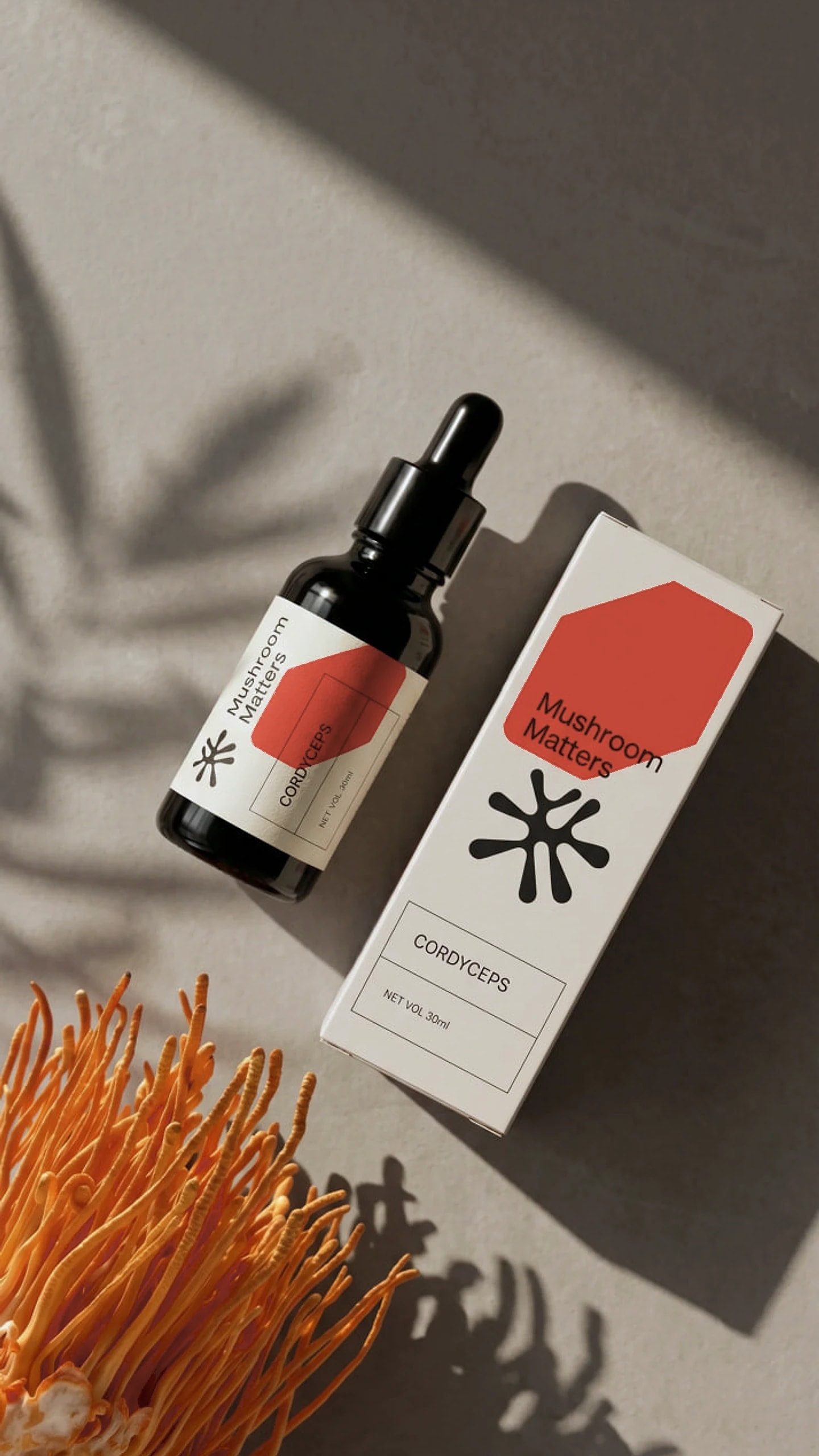
Ours is a liquid dual-extract: water pulls the beta-glucans, alcohol pulls the fat-soluble fraction, so the two-part chemistry comes through rather than half of it. The usual amount is 1 to 2 ml once a day, and one dropper holds about 0.5 ml, so a few drops under the tongue or in water covers it. Many people time it before training. Keep the bottle sealed and stored between +5 and +25°C. It is a functional food, not a medicine, and it does not replace medical advice. If you are pregnant, on medication, or managing a condition, check with a doctor first.
Before the next session
If you train and you are curious whether a steadier kind of energy suits you better than another coffee, cordyceps is the one to test, patiently, across a few weeks rather than a single morning. We grow and bottle Cordyceps militaris here in Yerevan and bring it to your door anywhere in the country, so trying it is easy. Give it the consistency the research asked for, pay attention to how the back half of your workout feels, and let that tell you whether it earns a place in your routine.
Read next
Sources
From the shop
Comments
Leave a comment or ask a question.