Reishi mushroom: benefits, research and how to take it
Reishi and Ganoderma lucidum: research on fatigue, questions about sleep, the limits of the evidence, and instructions for using and storing our liquid extract.
Contents
- What "adaptogen" actually means here
- Ganoderic acid A, and the rest of the chemistry
- Can Reishi be used for sleep?
- What the trials actually showed
- Where the mushroom grew changes what you get
- Fruiting body over mycelium
- Dual extraction, and why it is used
- Who it suits, and who should skip it
- A few honest caveats
- How to take and store Reishi extract
- An evening thing
Reishi is the common name on our Ganoderma lucidum extract. Questions about its benefits often concern fatigue, stress and sleep. This guide looks at the compounds and human studies behind those questions, where the evidence stops, and how our liquid extract is made and used.
What "adaptogen" actually means here
The word gets thrown around loosely, so let me pin it down. An adaptogen is not a stimulant and not a sedative. It does not push you up or hold you down. The claim is narrower and stranger. It helps the body cope with stress rather than moving it in one fixed direction. Give the same extract to someone wound tight and to someone flat, and the idea is that both drift back toward their own baseline. Reishi is one of the older members of that category, and the framing sets your expectations correctly. You are not taking a switch. You are taking something that, at best, nudges a regulatory system.
Ganoderic acid A, and the rest of the chemistry
The compound most often named is ganoderic acid A, a triterpene. It belongs to a group called the lanostane triterpenes, and within reishi the ganoderic acids are the most abundant triterpenoid class with reported pharmacological activity. That is one half of the picture. The other half is the beta-glucan polysaccharides, long-chain sugars linked in the literature to immune modulation. Alongside those two headline groups the fruiting body carries a longer tail of constituents: alkaloids, flavonoids, saponins and other triterpenes among them. No single molecule explains reishi on its own, which is part of why clean, one-compound studies are hard to run.
Can Reishi be used for sleep?
Research on reishi does not establish that our extract improves sleep or relieves tension within a particular number of weeks. Findings from a specific study should be read alongside its preparation, participants and limitations. They are not a treatment recommendation or a guarantee for an individual buyer.
What the trials actually showed
There is human data, and it is honest to say it is thin. The trial people cite most is a 2005 study in neurasthenia by Tang and colleagues: 132 patients randomized to a reishi polysaccharide extract (Ganopoly) or placebo, 1,800 mg three times a day for eight weeks. The treatment group reported roughly a 28.3% drop in their sense of fatigue from baseline against about 20.1% for placebo, and a 38.7% rise in sense of well-being against 29.7%. Clinician-rated severity fell about 15.5% with the extract versus 4.9% with placebo, and 51.6% of the treated group were rated more than minimally improved against 24.6% on placebo. Real numbers, and a real gap over placebo. Also one cohort, in one country, on a polysaccharide extract rather than a triterpene one. Treat it as a signal, not a settled result.
Where the mushroom grew changes what you get
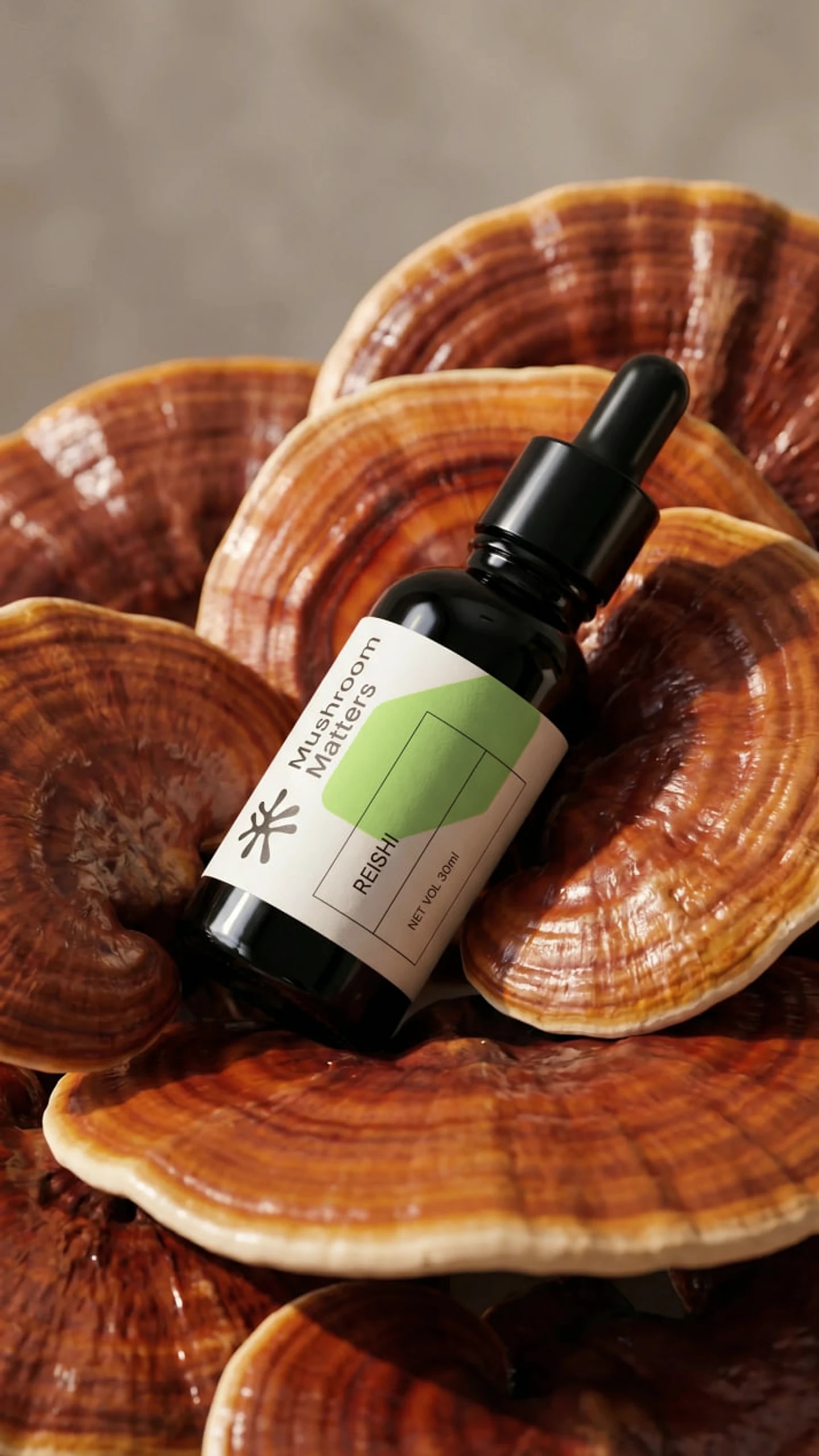
One detail deserves more attention than it usually gets, because it explains why two reishi products can behave differently. Potency depends a lot on cultivation. A study across six cultivated varieties found ganoderic acid A ranging from about 1.96 mg/g in material from Liaocheng to about 7.25 mg/g from the Dabie Mountain source, nearly a fourfold spread by origin alone. Total triterpenoid content across the same varieties ran from roughly 2.07% to 5.38%. The authors argued that ganoderic acid A and B content can serve as a scientific basis for grading reishi quality, since those two account for over half of the active triterpenoid constituents. The plain lesson: the label matters less than the growing, and "reishi" on a jar tells you the species, not the strength.
Fruiting body over mycelium
Among cultivated mushrooms, reishi is valued more for its pharmaceutical profile than its nutritional one, and that shapes how it is sourced. The traditional material is the fruiting body, the hard bracket itself, rather than mycelium grown on grain. The distinction is not snobbery. The triterpene fractions that give reishi its character concentrate in the fruiting body, and a mycelium-on-grain product is a different thing chemically even when the species on the label is the same. If you are comparing extracts, this is one of the first questions worth asking.
Dual extraction, and why it is used
Reishi is a case where the extraction method is not a marketing flourish. The two active groups do not dissolve in the same solvent. The beta-glucans are water-soluble and come out in a hot-water decoction. The triterpenes, ganoderic acid A included, are not, and need alcohol to pull them. Steep the mushroom in only one and you leave half the chemistry in the spent material. A dual extraction runs both a water and an alcohol phase and recombines them, which is the point of taking an extract rather than chewing on a piece of woody bracket you could not digest anyway.
Who it suits, and who should skip it
Reishi tends to appeal to people whose problem is not falling asleep so much as winding down: knowledge workers who close a laptop at midnight with a head still going, anyone whose stress lives in the background and quietly wrecks sleep quality. It fits the same routine as evening tea. It is a poor match for anyone expecting an acute effect tonight, and it is not a treatment. Both English and Russian reference sources are candid that the overall clinical evidence is poor and that there is no good evidence reishi treats any specific medical condition. If you are pregnant, on blood thinners or immune-modulating medication, or managing a diagnosed illness, this is a conversation for your doctor, not a jar.
A few honest caveats
The studies discussed here do not justify a fixed course or a promised result for our product. Preparations and doses differ between studies. When comparing extracts, look at the raw material, ingredients and directions; a bottle’s volume tells you how much it contains, not how long it takes to work.
How to take and store Reishi extract
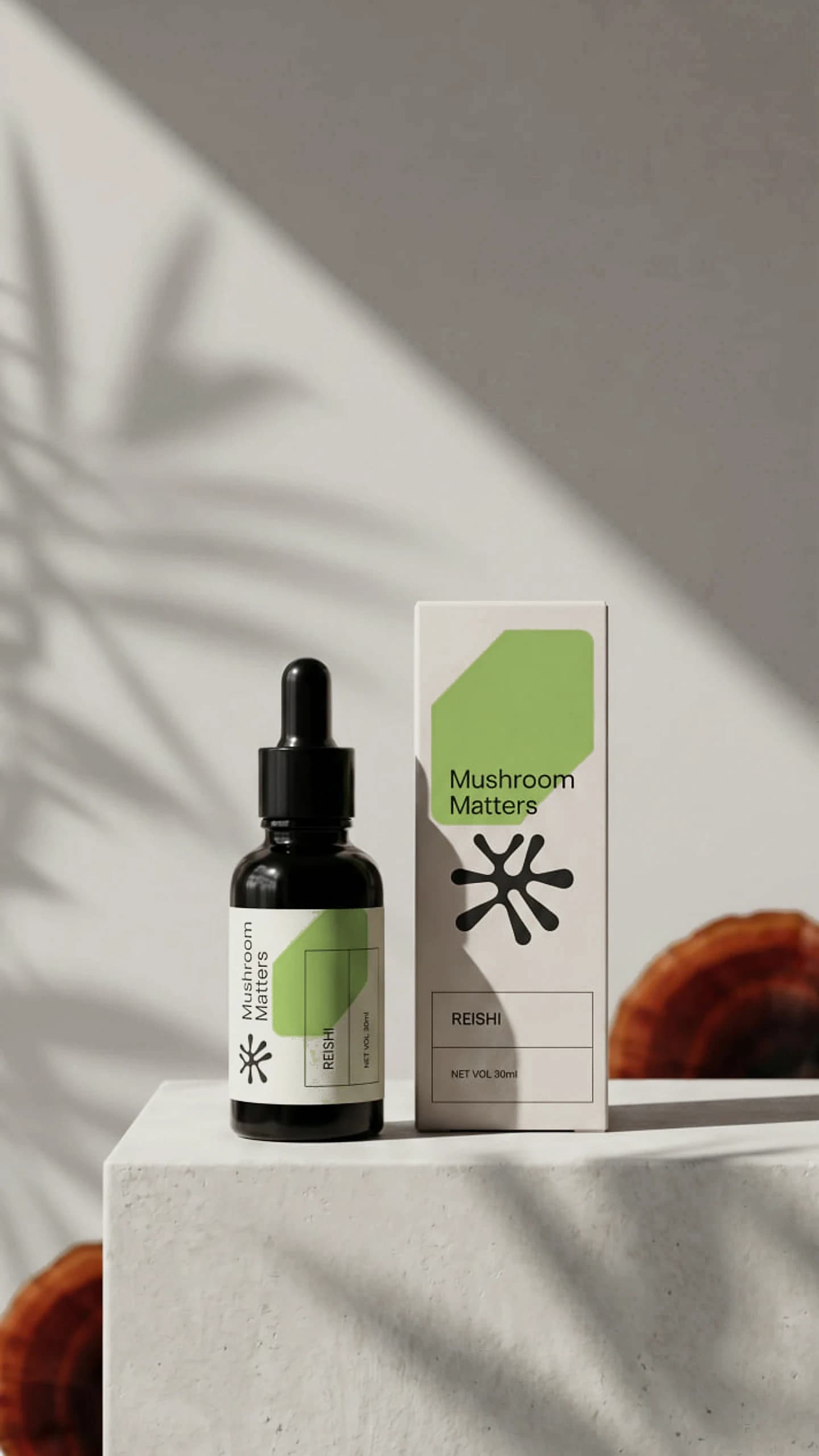
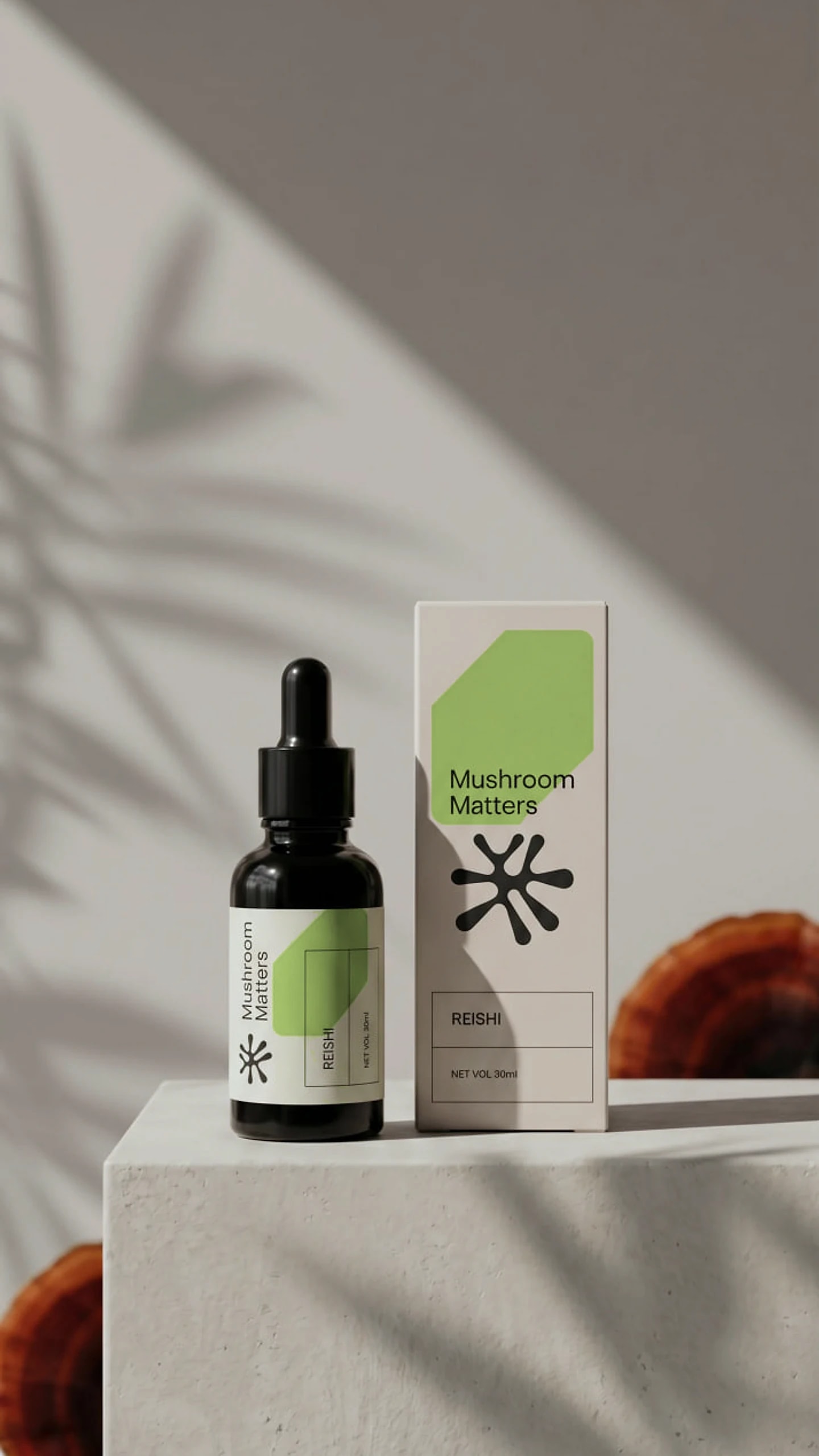
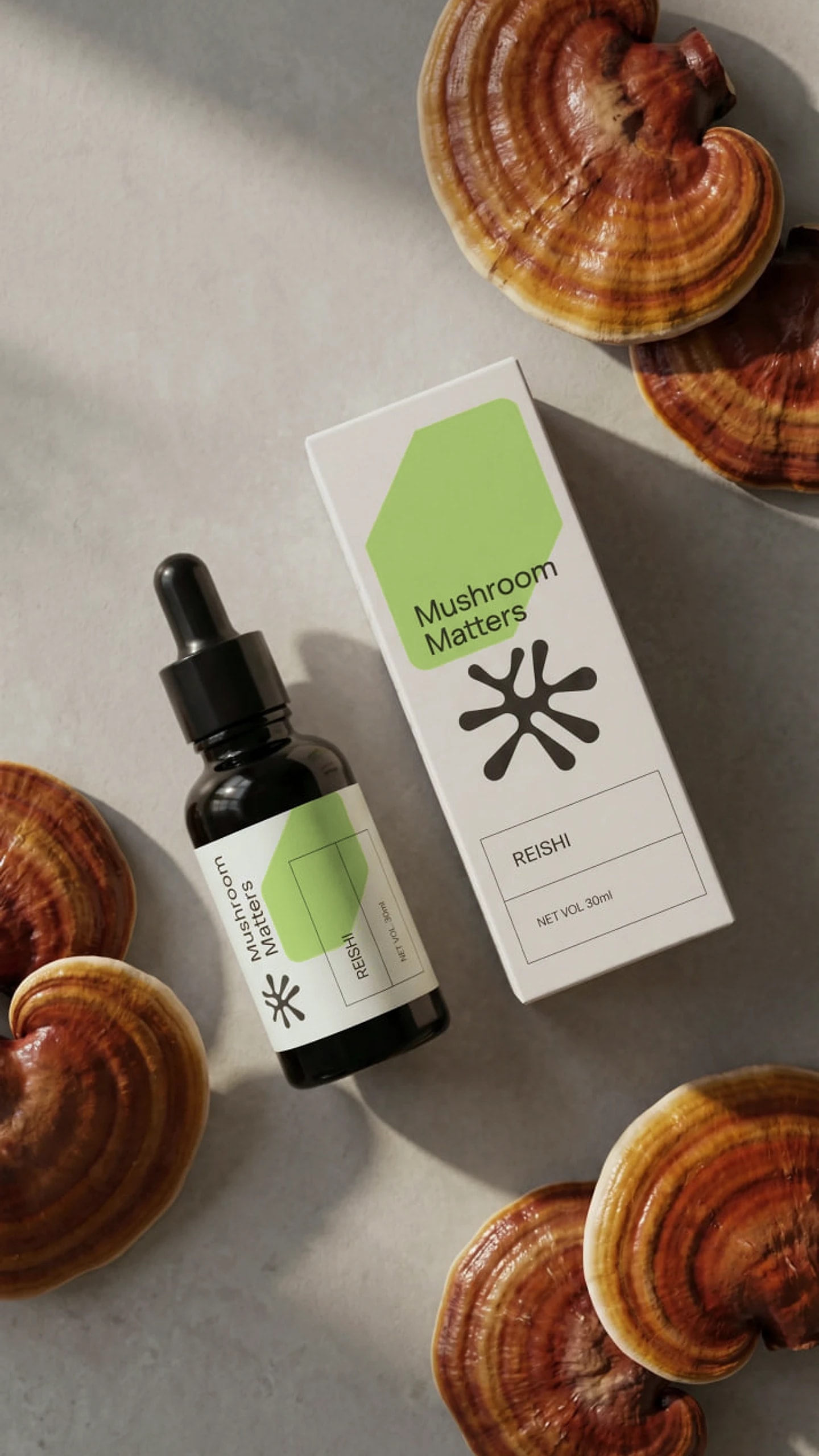
This is a liquid dual-extract in a 30 ml bottle. The label directions are 1–2 ml once daily; one dropper holds approximately 0.5 ml. At that rate, a bottle contains 15–30 days of product. This is a volume calculation, not a recommended course or a promise of effect. Keep the bottle sealed at +5 to +25°C, away from direct sunlight.
An evening thing
Reishi rewards a habit more than a heroic dose. The obvious slot is the end of the day, folded into whatever already signals to you that work is over: the kettle, dimmed lights, a book instead of a screen. Nothing about the extract forces sleep, so the routine around it does part of the job. We grow and bottle ours in Yerevan and send it out to the rest of Armenia, for the people who want the calm end of the mushroom shelf rather than the caffeine end of it. Take it for a month, pay attention to your sleep, and decide for yourself.
Read next
Sources
From the shop
Comments
Leave a comment or ask a question.