How long does Lion’s Mane take to work?
How long Lion’s Mane takes to work, in weeks not days: what the Mori, Nagano and Docherty trials measured, and why a fair check means finishing the bottle.
Contents
- One dose, one hour: the only acute study
- Weeks two to four: where the mood studies sit
- Weeks eight to sixteen: where the memory studies sit
- So what timeline is realistic?
- Why it feels like nothing is happening: five mistakes
- What actually moves the speed
- How to run a fair four-week check
- Will I feel anything on day one?
- A month in, and nothing. Now what?
- Does the effect stay if I stop?
- The bottle and the calendar
The honest answer first: Lion’s Mane works on a scale of weeks, not days — if it works for you at all. In the most-cited human trial, cognitive scores separated from placebo only at week eight of daily use. The one study that measured people an hour after a single dose found a small improvement on one task and a worsening on another. And every trial that found anything used a specific preparation in a specific group of people, so none of them predicts what our extract — or anyone’s — will do for you personally. What the research can do is set a sane expectation. Below is the timeline it actually drew, week by week, the factors that move it, and the five mistakes that make people conclude the mushroom “isn’t working” before the calendar it was tested on has even run out.
One dose, one hour: the only acute study
If you took your first dropper this morning and are waiting to feel it, the only human study that even asked that question is worth knowing in its real shape. Docherty and colleagues (2023, Nutrients) gave 41 healthy adults aged 18–45 a 1.8 g dose of Hericium erinaceus and tested them 60 minutes later. On one task — the Stroop, a measure of processing speed under interference — the Lion’s Mane group got significantly faster (p=0.005). On another, immediate word recall, they got significantly worse (p=0.013). The authors themselves call it a pilot and ask for caution. Read plainly: even in a laboratory, with the timing measured to the minute, “you take it and you feel it” is not what happened. The single-dose answer is a shrug with one interesting data point, not a kick.
Weeks two to four: where the mood studies sit
The earliest findings that look anything like an “effect” live in the four-week zone, and they concern mood rather than memory. Nagano and colleagues (2010, Biomedical Research) gave 30 women cookies containing 2 g of powdered Lion’s Mane fruiting body per day for four weeks; the group ended with lower scores on depression and indefinite-complaint indexes than the placebo group. Docherty’s 28-day arm points the same direction, though weaker: after four weeks, the Lion’s Mane group reported lower subjective stress than placebo — a trend at p=0.051, which is honest statistics-speak for “suggestive, not proven”. Both are small, both used self-report scales, both enrolled specific groups. But if you are keeping a personal calendar, this is the zone where the research says anything at all was visible early.
Weeks eight to sixteen: where the memory studies sit
The cognitive findings everyone quotes live further out. Mori and colleagues (2009, Phytotherapy Research) randomised 30 Japanese adults aged 50–80 with mild cognitive impairment: the treatment group took about 3 g of dry Yamabushitake powder daily for 16 weeks. Their scores on a cognitive scale grew steadily, separating significantly from placebo at weeks 8, 12 and 16 — not before. And when the powder stopped, the gains faded within the following four weeks. Saitsu and colleagues (2019) found a similar shape in healthy adults over 50: 3.2 g of powdered fruiting body daily for 12 weeks improved the Mini-Mental State score, while two other memory tests did not move. The longest trial of all — 49 weeks of erinacine A-enriched mycelium — reported its gains at week 49. The pattern across all of them: the further out the measurement, the more there was to see.
So what timeline is realistic?
Assembled honestly, the research calendar reads like this. Days one to seven: nothing measurable is expected — the acute study found a mixed blip, not a benefit. Weeks two to four: the zone where small mood studies saw their differences, in specific groups, on self-reported scales. Week eight and beyond: the zone where the cognitive trials found what they found — in people with mild cognitive impairment or over fifty, on grams of a particular powder. And after stopping: the one follow-up measurement we have says the change did not persist. Two things must be said plainly alongside this. First, these are schedules of other preparations in other people — not a promise about our extract or a deadline it owes you. Second, a mushroom that supports an ongoing process, rather than flipping a switch, is exactly what a timeline like this describes.
Why it feels like nothing is happening: five mistakes
The first mistake is quitting inside the first two weeks. Every finding above lived at week four or later; a trial judged at day ten is a trial that never happened. The second is irregular use — a dropper when you remember, nothing when you do not. The studies dosed daily without gaps; “some weeks” is a different experiment, and a weaker one. The third is waiting for a stimulant. Caffeine teaches you to expect a noticeable lift within the hour, and Lion’s Mane is not in that business at all: what people who stay with it describe is closer to a steadier background — slightly clearer mornings, less fog by mid-afternoon — easy to miss if you are listening for a bang.
The fourth mistake is measuring nothing. A subtle change that accumulates over weeks is invisible to memory — by week four you no longer remember week one well enough to compare. Pick one yardstick before you start and write it down weekly: how the morning work block felt, how fast the afternoon slump arrived, anything concrete enough to revisit. The fifth is a wrong goal for this mushroom. Lion’s Mane is the focus-and-clarity end of the shelf; if what you actually want is help falling asleep, that is a different conversation (and a different bottle). And if what you are noticing is persistent, worsening trouble with memory, that is not a supplement question at all — it is a doctor question, and no extract is the right first answer to it.
What actually moves the speed
Within what you control, four things matter. Consistency first: the entire evidence base is built on uninterrupted daily intake, so the calendar only starts on days you actually take it. The preparation second: the trials used specific dry powders in gram doses, and there is no honest conversion between milligrams of a powder and millilitres of an extract without composition data for both — what a dual extract does guarantee is that the soluble chemistry was actually pulled out of the raw material, which milled powder does not do on its own. The dose third: ours is 1–2 ml once a day, two to four droppers, and taking less stretches the arithmetic rather than the effect. And your starting point fourth: the trials found their clearest signals in older adults and in people with mild impairment; a healthy twenty-five-year-old at their cognitive peak has, frankly, less room to move, which is one reason pilot studies in young healthy adults keep coming back mixed.
How to run a fair four-week check
If you want to give the bottle a fair trial, copy the shape of the studies rather than the vibe. Pick a fixed daily moment and keep it — with breakfast is the easiest to defend. Take the label serving, 1–2 ml, every day without exceptions. Note one baseline before the first dose, then the same note weekly. Change nothing else at the same time, or you will never know what did what. And review at the bottom of the bottle, not at the middle: 30 ml at 1–2 ml a day is 15 to 30 days, which reaches the zone of the four-week mood studies but honestly not the eight-week zone of the cognitive ones. If after a clean month your notes say nothing changed, that is a legitimate answer too — we would rather you have it than chase a promise we never made.
Will I feel anything on day one?
Probably not, and that is the correct expectation rather than a defect. The only acute human measurement found one test faster and one test slower an hour after a single dose — a coin flip, not a feeling. Lion’s Mane contains no stimulant, and the compounds it is studied for are tied to slow processes like neurotrophic signalling. If you felt something dramatic on day one, the likelier explanation is expectation, coffee or a good night’s sleep. Give the calendar the weeks the studies asked for.
A month in, and nothing. Now what?
Run down the five mistakes first: were you daily, at the full serving, with something written down to compare against? If yes to all of it, then the honest answer is that the studies’ clearest signals sat at eight weeks and beyond, and a month is simply not the whole test — while also being true that no amount of waiting obliges a supplement to work for you. We cannot promise a result at any week, and nobody honestly can. What we can say is that the research shape is a marathon, and that a fair verdict, whichever way it lands, is worth more than a bottle bought on hope.
Does the effect stay if I stop?
The one follow-up measurement we have says no. In the 2009 trial the cognitive gains faded within four weeks after participants stopped the powder. That is not a reason against the mushroom — it is a description of the mechanism: it supports an ongoing process rather than rebuilding anything permanently. The practical reading is that Lion’s Mane, if it suits you, is a standing habit like sleep or exercise, not a course with a graduation date. Plan for it the way you would plan for a daily walk.
The bottle and the calendar
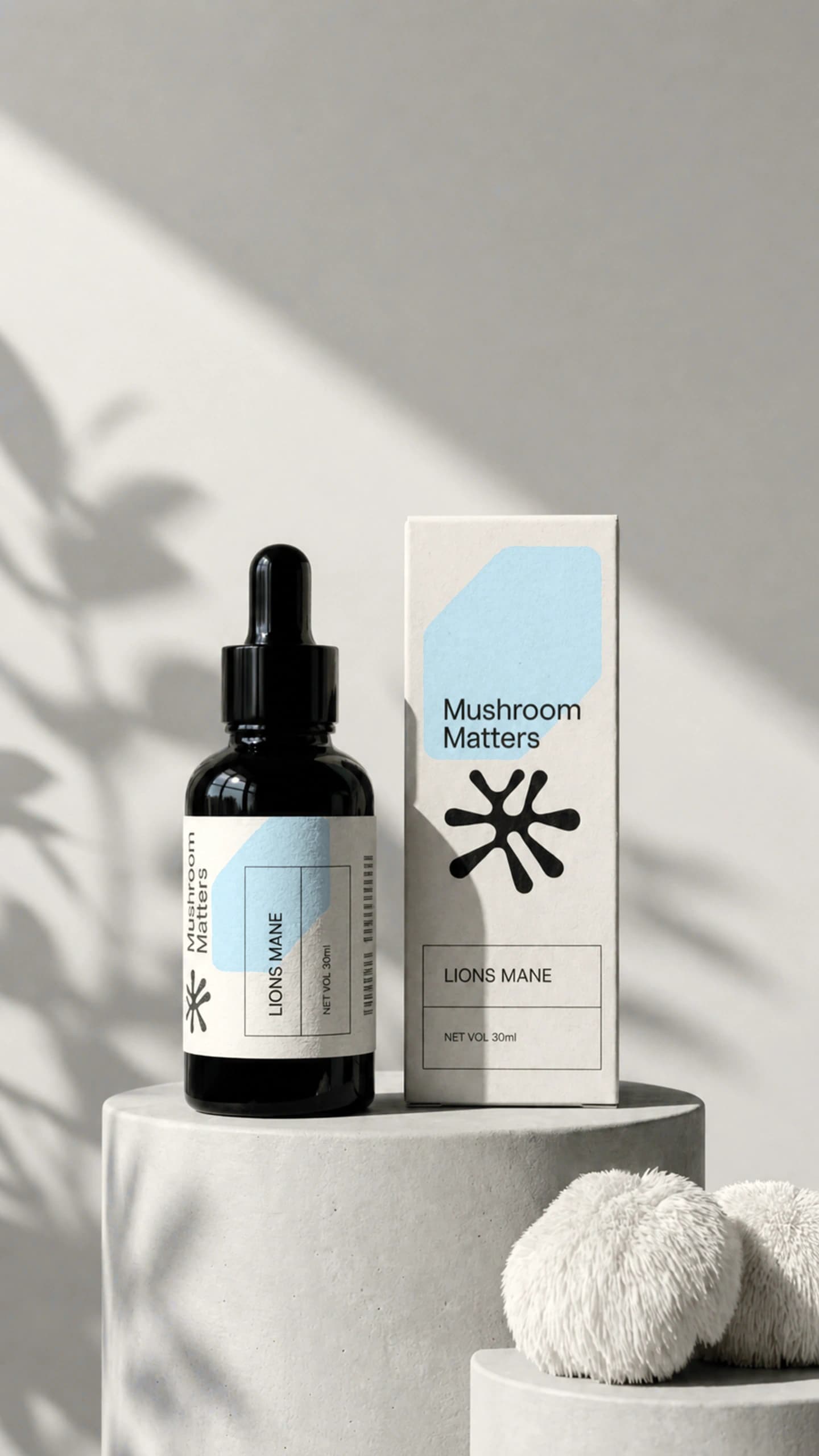
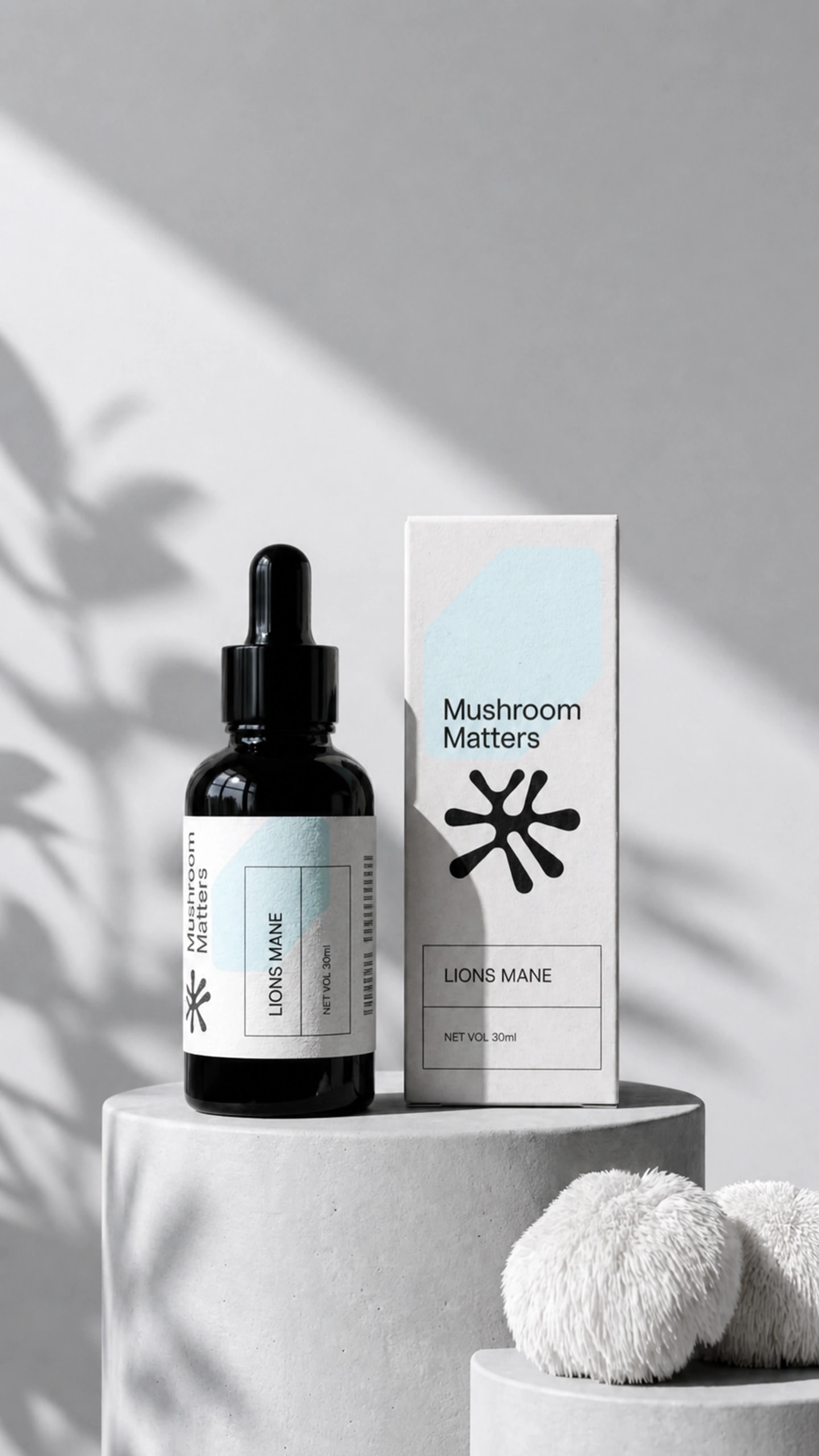
Our Lion’s Mane is a liquid dual-extract: we grow the mycelium without a grain substrate, pull the water-soluble and alcohol-soluble fractions in two stages, remove the alcohol and bottle the extract in 30 ml droppers — all in Yerevan, with no powder added to the finished liquid. The production complies with the EAEU technical regulations, declaration of conformity No. RU Д-AM.РА02.В.39933/25. It costs 12,000 ֏ with free delivery — one to two days in Yerevan, up to a week across Armenia. What we will not sell you is a countdown timer: the studies above are the only honest clock there is, and they say weeks. Start it like a habit, keep the notes, and let the bottom of the bottle — or the second one — be where you decide.
Read next
Sources
- Mori et al., 2009 · 16-week trial in mild cognitive impairment (Phytotherapy Research)
- Nagano et al., 2010 · Four weeks of Lion’s Mane and mood (Biomedical Research)
- Saitsu et al., 2019 · Twelve weeks of Lion’s Mane in adults over 50 (Biomedical Research)
- Docherty et al., 2023 · Acute and 28-day effects in young adults (Nutrients)
From the shop
Comments
Leave a comment or ask a question.