How to take liquid mushroom extracts: drops, courses and a simple day plan
How to take liquid mushroom extracts: the daily dose in droppers, a simple day plan for Lion’s Mane, Cordyceps and Reishi, common mistakes and safety notes.
Contents
- Why consistency matters more than the dose
- How to measure a serving with the dropper
- A simple day plan for the trio
- Mistakes that waste the course
- Safety: who should talk to a doctor first
- Can I take the extracts with coffee?
- Under the tongue or in a glass of water?
- Is there alcohol in the extract?
- What if I miss a day?
- Where to start
The short answer: one to two millilitres of a liquid extract once a day, every day, at a time you can actually keep. One dropper from our bottle holds about 0.5 ml, so the daily serving is two to four full droppers — under the tongue or stirred into a glass of water. Everything else in this guide — timing, courses, combining Lion’s Mane, Cordyceps and Reishi — is detail around that single habit. And one boundary up front: these extracts are functional foods, not medicines, and the human research behind them is still small. This guide explains the practice, not a treatment.
Why consistency matters more than the dose
Functional mushrooms are not stimulants: nothing switches on after the first dropper. Look at the shape of the studies people actually cite. In the 2017 trial of a Cordyceps militaris blend, the measurable change in oxygen use appeared after three weeks of daily intake, not after the first week. In the 2009 Lion’s Mane trial, scores on a cognitive scale separated from placebo at week eight and later — and faded within four weeks after participants stopped taking the powder. Both were small studies of specific preparations, and they do not predict what our extract will do for you. But they point the same way: whatever these mushrooms do is cumulative, and it depends on continued use.
The practical reading: give a course two to four weeks of unbroken daily use before you judge it. That makes regularity the real variable, and the easiest way to stay regular is to attach the dropper to something you already do — morning coffee, the gym bag, the evening kettle. As for food: the label does not tie the serving to a meal, so with or without breakfast is your choice. If your stomach is sensitive, taking it with food is the gentler option.
How to measure a serving with the dropper
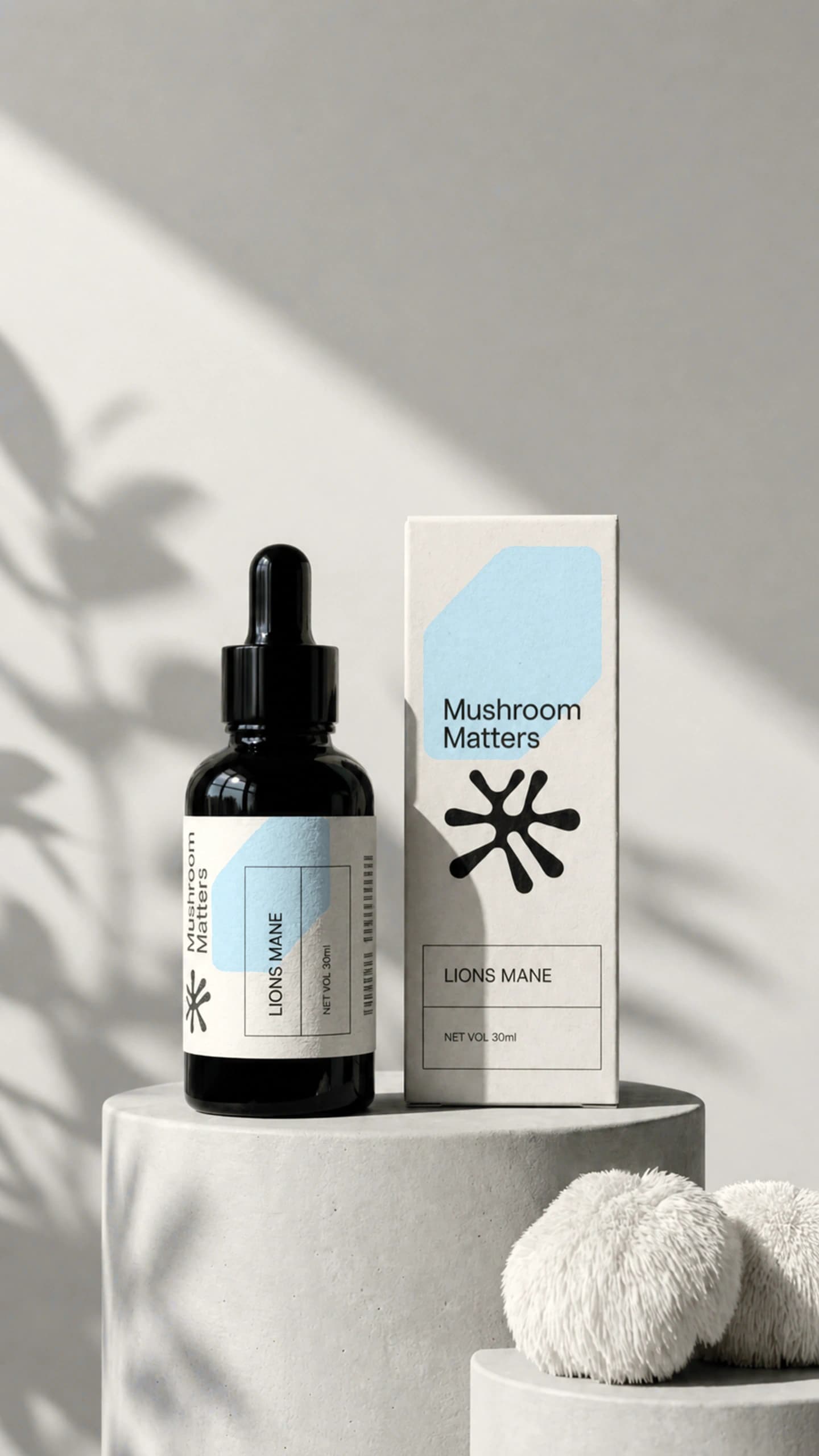
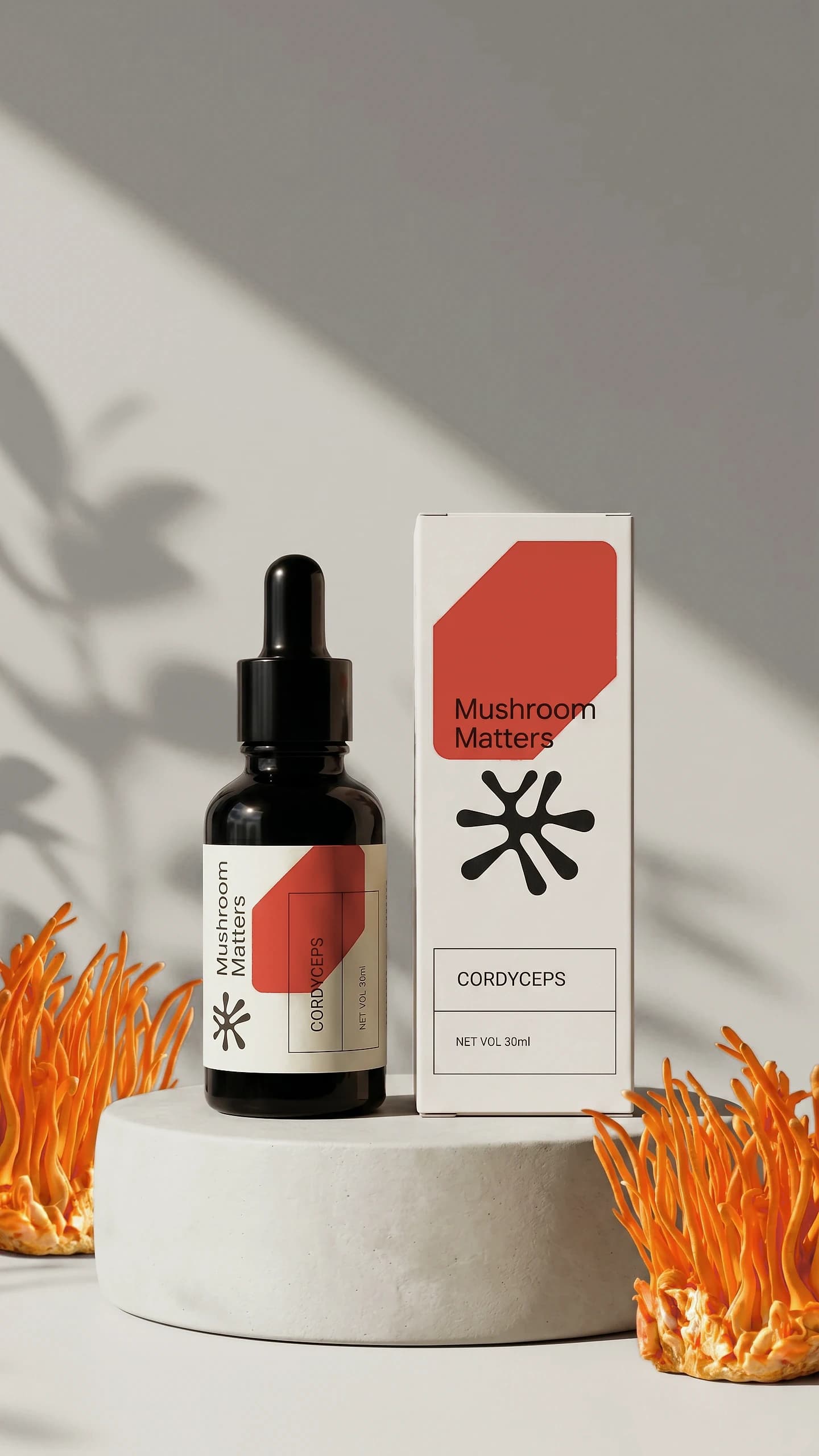
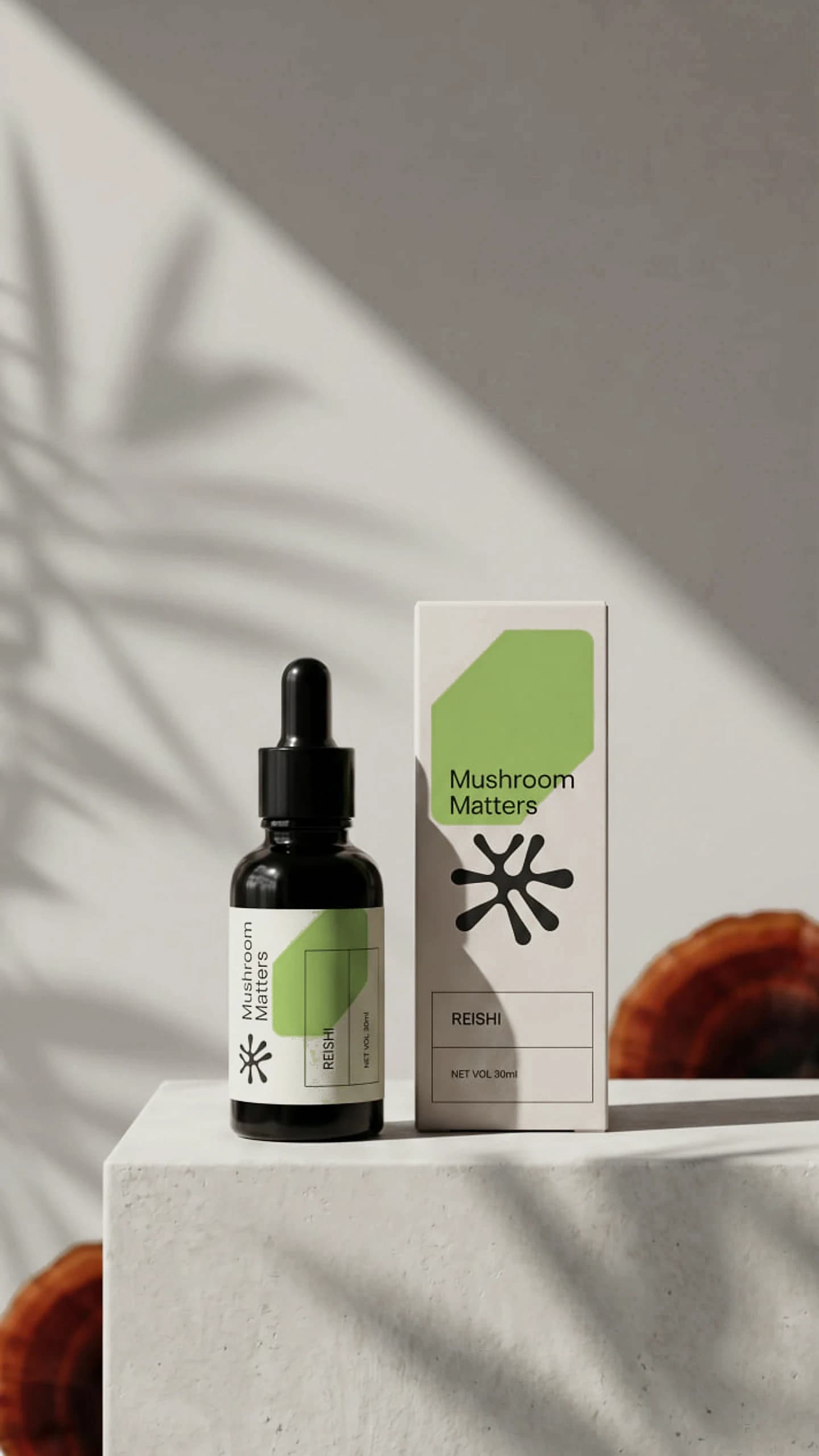
Every Mushroom Matters extract comes in a 30 ml bottle with a glass dropper. One full squeeze draws roughly 0.5 ml. The dropper rarely fills to the very top — that is normal for this kind of pipette, so count full squeezes, not the visible fill line. Two droppers make 1 ml, four make 2 ml, and the label serving of 1–2 ml once a day lands between those. At that rate a bottle lasts 15 to 30 days. That is arithmetic from the volume, not a prescribed course length and not a promise about when you will feel anything.
The mechanics are simple. Squeeze the bulb before the tip touches the liquid, release it under the surface, and you get a full draw. Then either hold the serving under the tongue for half a minute or stir it into a small glass of water — both are fine, and we come back to the choice below. Between servings keep the bottle sealed, at +5 to +25°C, out of direct sun. A bathroom shelf above a hot radiator or a car dashboard in July is not that.
A simple day plan for the trio
If you take all three extracts, the natural question is when. Here is the arrangement we suggest, with an honest caveat first: this is a practical routine, not a protocol from a clinical trial. No study has tested this schedule. It simply matches each extract to the part of the day where people usually want its character — and where it is easiest to remember.
Morning: Lion’s Mane. People reach for it around focus and mental work, so it belongs where the thinking happens — with breakfast or the first coffee. Before activity: Cordyceps. Its research trail is about endurance and effort, so the common habit is to take it ahead of training, a run or a physically long day; on rest days, morning is fine. Evening: Reishi. Its traditional and everyday use sits at the winding-down end of the day, so fold it into whatever already tells you the workday is over.
Can you take Lion’s Mane, Cordyceps and Reishi together? There is no established reason the three conflict: they are different species with different chemistry, and combining functional mushrooms is common practice. The cautious route, especially in the first month, is to add one at a time, about a week apart. That way, if something disagrees with you — your stomach, your sleep, anything — you know which bottle it was, instead of guessing at three.
Mistakes that waste the course
The first mistake is quitting at the end of week one. Nothing in the research base suggests a visible effect that early — the Cordyceps trial above separated its one-week and three-week results precisely because they differed. If you bought a bottle expecting a same-week result, the honest fix is to reset the expectation, not the dose. Decide upfront to finish the bottle on schedule, and only then review.
The second is an evening Lion’s Mane that keeps you up. A minority of people report unusually vivid dreams or a head that stays switched on when they take it late. That is anecdote, not measured data — but if your sleep turns noisy after evening servings, the fix is free: move the dropper to the morning and see whether the pattern changes.
The third is judging a liquid extract with powder arithmetic. Milligrams on a capsule label and millilitres in a dropper measure different things, and there is no honest conversion between them without composition data for both products. An extract is also a different experience from a stimulant or a strong coffee: if you expect a kick, you will miss what people actually describe — a quieter background change across weeks. And a small fourth: doubling the serving after a missed day. Skip means skip; take the normal amount tomorrow.
Safety: who should talk to a doctor first
A functional food is still something you take daily, and a few situations deserve a conversation with a doctor before the first bottle. Pregnancy and breastfeeding: there is no solid safety data for these mushrooms in that context, so the default is to wait. A known allergy to mushrooms: skip the category entirely. Blood thinners are a specific one for Reishi — Memorial Sloan Kettering’s integrative medicine service notes that Reishi can increase the risk of bleeding alongside anticoagulants such as warfarin. The same conversation applies if you take immunosuppressants, manage a chronic condition, or have surgery planned. None of this is alarmism; it is the boring, correct order of operations. And if anything feels wrong after you start, stop and ask.
Can I take the extracts with coffee?
Yes — no established conflict, and it is a common pairing. Cordyceps in particular is often discussed as an alternative to caffeine rather than an amplifier of it: caffeine works by blocking adenosine receptors, while cordycepin research concerns the energy side of metabolism, a different mechanism. If you are sensitive to stimulants, simply keep the total picture in mind: the extract does not cancel the espresso.
Under the tongue or in a glass of water?
Both are acceptable, and there is no comparative data honest enough to declare a winner. Under the tongue is a faster ritual and keeps the taste short; a small glass of water softens the flavour entirely. What actually matters is that the full measured serving goes in, every day. Pick whichever version you are more likely to repeat without thinking.
Is there alcohol in the extract?
Alcohol is part of the process, not of the finished bottle. Dual extraction uses hot water and ethanol in turn, because the compounds we want dissolve in different solvents. At Mushroom Matters the alcohol is then removed before bottling, and no mushroom powder is added to the finished liquid. So what you measure with the dropper is the combined extract — not a classic alcohol tincture.
What if I miss a day?
Nothing breaks. Take the normal serving the next day and carry on — do not double up to compensate. The research picture is about weeks of accumulated habit: in the 2009 Lion’s Mane trial, the changes faded over four weeks after people stopped, not overnight. One missed day inside an otherwise steady course is noise. A missed week is a reason to simply restart the count and be patient again.
Where to start
If you are choosing a first bottle, match the mushroom to the goal rather than collecting all three at once: Lion’s Mane for the focus end of the shelf, Cordyceps for training days, Reishi for evenings. We grow the mushrooms, run both extraction stages and bottle the finished extracts ourselves in Yerevan; the production complies with the EAEU technical regulations, declaration of conformity No. RU Д-AM.РА02.В.39933/25. Whichever one you start with, the instruction is the same unglamorous one: 1–2 ml a day, every day, and a fair review no earlier than the bottom of the bottle.
Read next
Sources
From the shop
- Lion’s Mane liquid extract, 30 ml — for the morning slotLion's Mane · Focus & clarity
- Cordyceps liquid extract, 30 ml — before training and long daysCordyceps · Energy & endurance
- Reishi liquid extract, 30 ml — the evening bottleReishi · Calm & balance
- What dual extraction is and why it needs both water and alcohol
Comments
Leave a comment or ask a question.