Mushroom extracts in Yerevan without the iHerb wait
Used to ordering lion’s mane or reishi on iHerb? In Yerevan, locally made mushroom extracts arrive in 1–2 days — and when iHerb is still the answer.
Contents
- How an iHerb order actually reaches Yerevan
- What iHerb is genuinely good for
- What buying locally changes
- A checklist for any mushroom supplement sold in Armenia
- What we make, and what it costs
- Will customs charge me for supplements?
- Are marketplace resellers safe?
- How do parcel forwarders work?
- The short version
If you are used to ordering lion’s mane, reishi or cordyceps on iHerb and have just landed in Yerevan, here is the direct answer. iHerb does deliver to Armenia — its own shipping page lists the country, with air freight from US warehouses and carriers including ONEX, DHL Express and FedEx — but the parcel crosses an ocean, passes customs, and realistically takes one to two weeks, sometimes longer, plus a shipping fee. For the mushroom extracts specifically there is a second option: they are made right here in Yerevan and delivered free in one to two days. To be clear about the frame: for everything else on your supplement shelf — vitamins, omega-3, minerals — iHerb remains the answer, because three mushrooms are all that local production here covers. This article compares the two routes for that mushroom niche only: what each costs in time and money, and the questions worth asking any seller in between.
How an iHerb order actually reaches Yerevan
The mechanics matter because they explain both the wait and the price. You order on the iHerb website; the parcel leaves a US warehouse and flies to Armenia by air freight. The iHerb shipping page for Armenia names the carriers — ONEX, DHL Express, FedEx — and warns that the estimated window can stretch with air freight delays or a customs hold, and that customs charges, if any arise, are billed separately. ONEX, by the way, is no grey workaround: it is a Yerevan-based forwarder that also appears among iHerb’s listed carriers for Armenia, which is why the two names come up together in every local chat about supplements.
Add up the real cost and the arithmetic changes. The product price, then international shipping, then possibly a forwarder’s per-kilogram fee if you route the parcel through a warehouse address, then customs if the order crosses the duty-free threshold. A supplement that looked like a bargain at checkout can arrive two weeks later at a noticeably higher total. None of this makes iHerb a bad choice — it means that “shipped from the US” is a service you are paying for, and its price is worth knowing before you compare it with a local bottle.
What iHerb is genuinely good for
Selection, above all. iHerb carries thousands of supplements, including the mushroom brands people relocating from the US or Europe already know — Real Mushrooms, Four Sigmatic, Host Defense and others — with ingredient lists, thousands of customer reviews and often third-party certifications. If your list runs wider than mushrooms — vitamins, omega-3, minerals — nothing local replaces that shelf, and we are not pretending otherwise. And if you need a specific product from a specific brand, no shelf in Armenia matches iHerb’s. It is also fair to say the big American brands largely built the functional-mushroom category: much of what people know about these mushrooms came from their materials.
Two honest caveats belong here, and they apply to iHerb’s catalogue as much as to anyone else’s. First: in the United States, dietary supplements are not approved by the FDA before they go on sale — under the DSHEA framework the manufacturer answers for safety and labelling, and the regulator steps in afterwards. “Sold on iHerb” is a distribution fact, not a government quality stamp. Second: a famous brand name protects you only when the product is genuine and was stored properly — which brings us to marketplaces and resellers below.
What buying locally changes
A local producer inverts the trade-offs. Instead of selection you get speed, freshness and a short chain of custody. An extract made in Yerevan does not cross an ocean: the batch was bottled recently, it has not spent weeks in cargo terminals and warehouses, and it reaches you in one to two days instead of one to two weeks. No shipping fee on top, no customs threshold to watch, no forwarder account to maintain. And when a question comes up — what is in it, how it was made, where this batch came from — you are asking the people who made it, in Russian or Armenian, not a support ticket in another time zone.
There is one more argument that rarely makes it into price comparisons: continuity. Functional mushrooms are the kind of thing people take daily, over months — the human studies behind them, small as they are, all ran for weeks. A restock that travels two weeks by international post is a built-in break in exactly the routine the product is bought for. A local bottle you can reorder on Monday and hold on Wednesday removes that friction entirely.
The honest limitation is the flip side of the same coin: a local producer makes a few products, not a few thousand. If your goal is a capsule from one particular American brand, a Yerevan workshop is not a substitute, and we would not pretend otherwise. The realistic question is different: for the mushroom itself — lion’s mane, reishi, cordyceps — does the specific jar matter, or do the species, the raw material and the extraction method matter? If the second, a transparently made local extract is a full answer, not a compromise.
A checklist for any mushroom supplement sold in Armenia
Whichever route you take, five questions separate a serious product from a label. One: is the species named in Latin, and is the raw material stated — fruiting body or mycelium, and if mycelium, grown on what? Two: how was it extracted — water only, alcohol only, or both, and is there a measured beta-glucan figure instead of a vague “polysaccharides” percentage? Three: what is the full composition of the finished product, including anything removed or added after extraction? Four: who is the manufacturer, and can you actually reach them — an address, a contact, a legal entity? Five: for anything sold in the EAEU, is there a certificate or declaration of conformity you can look up?
Price deserves its own line, because import logistics hide inside it. Compare the cost per day of use, not per jar: divide the price by the number of days the product’s own directions give you. Only then add what the import route really charges — shipping, the forwarder’s fee, possible duty. A 12,000-dram bottle delivered free tomorrow and a cheaper-looking jar plus eight dollars of shipping plus two weeks of waiting are not the same offer.
What we make, and what it costs
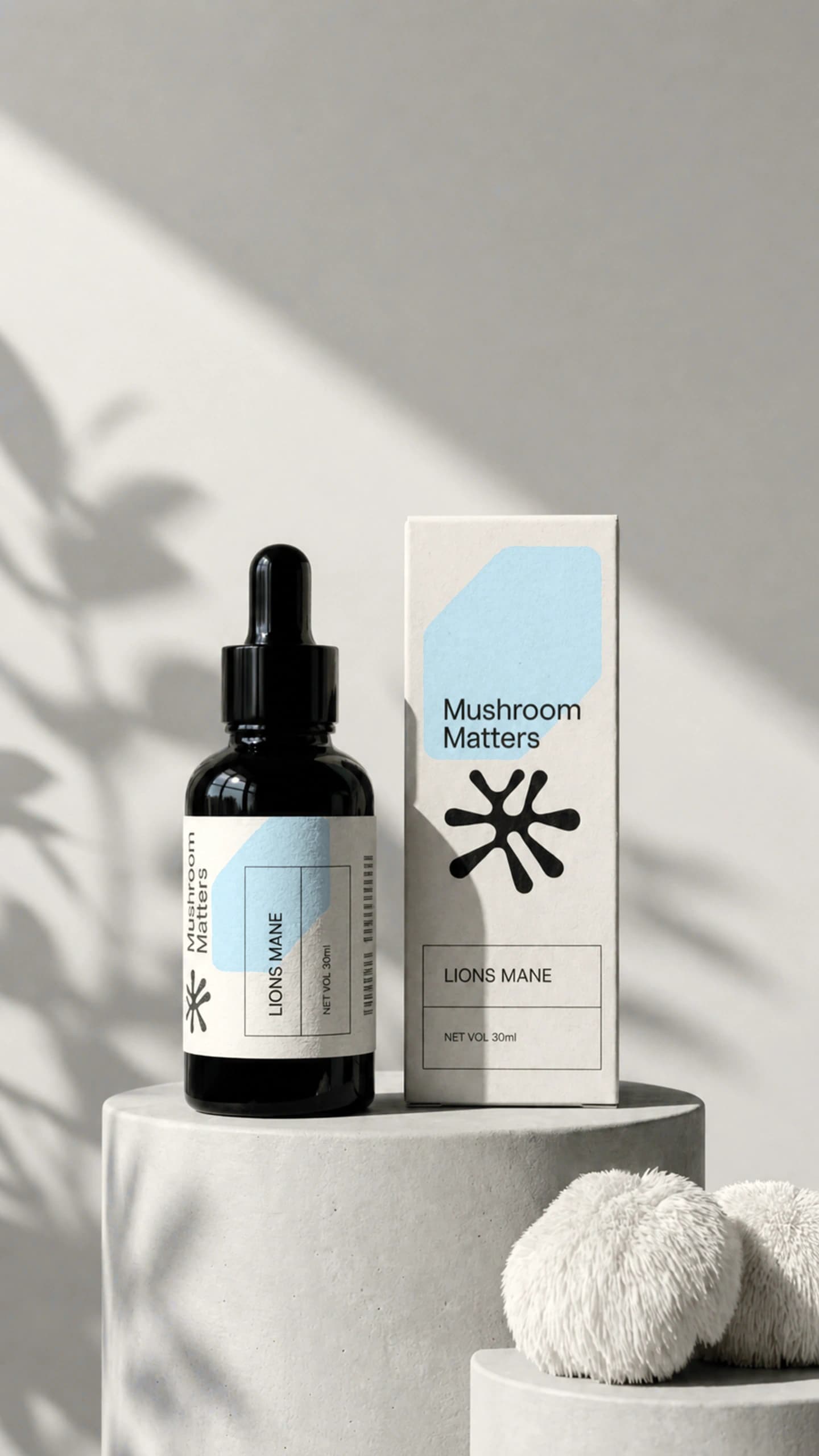
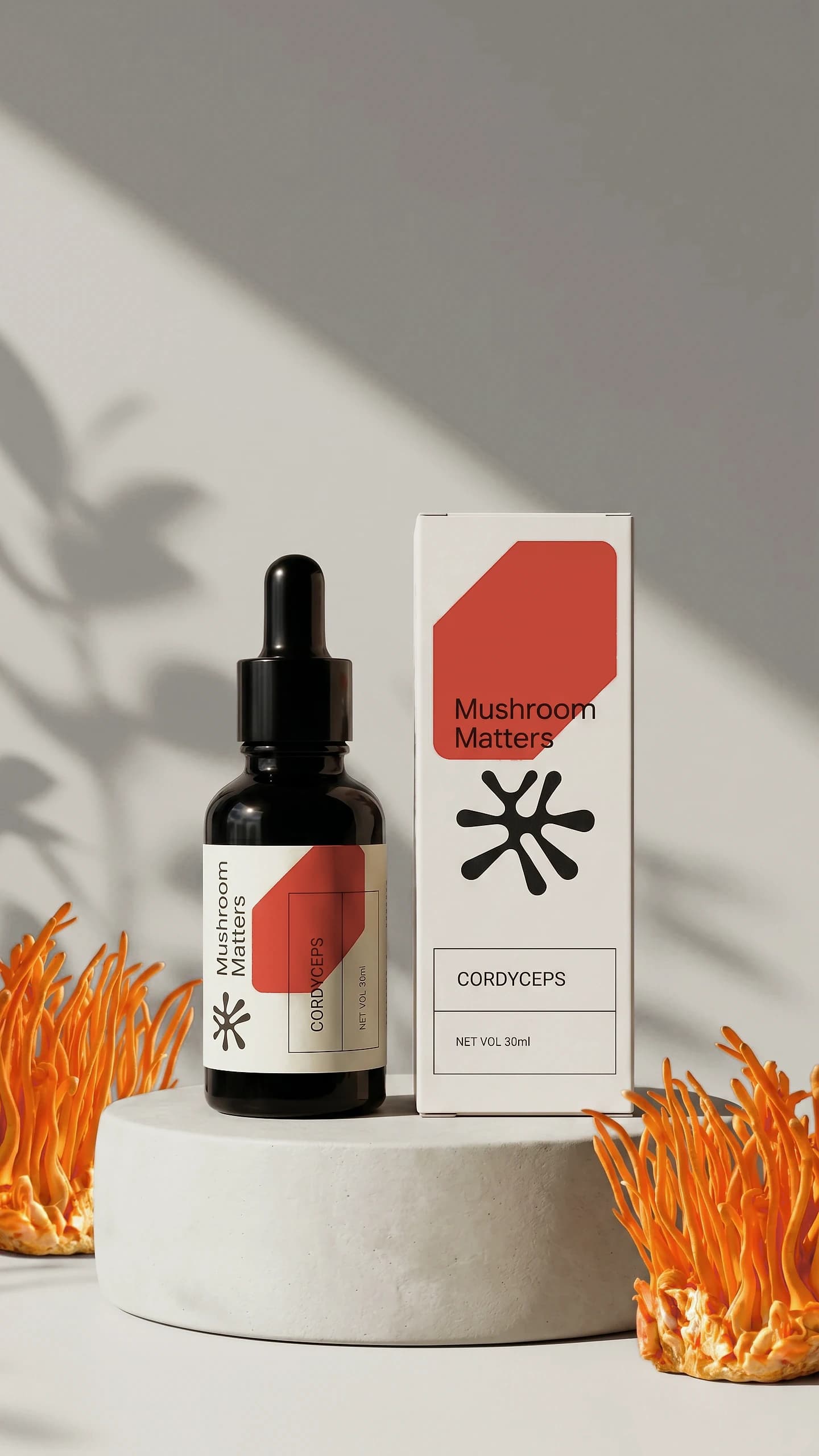
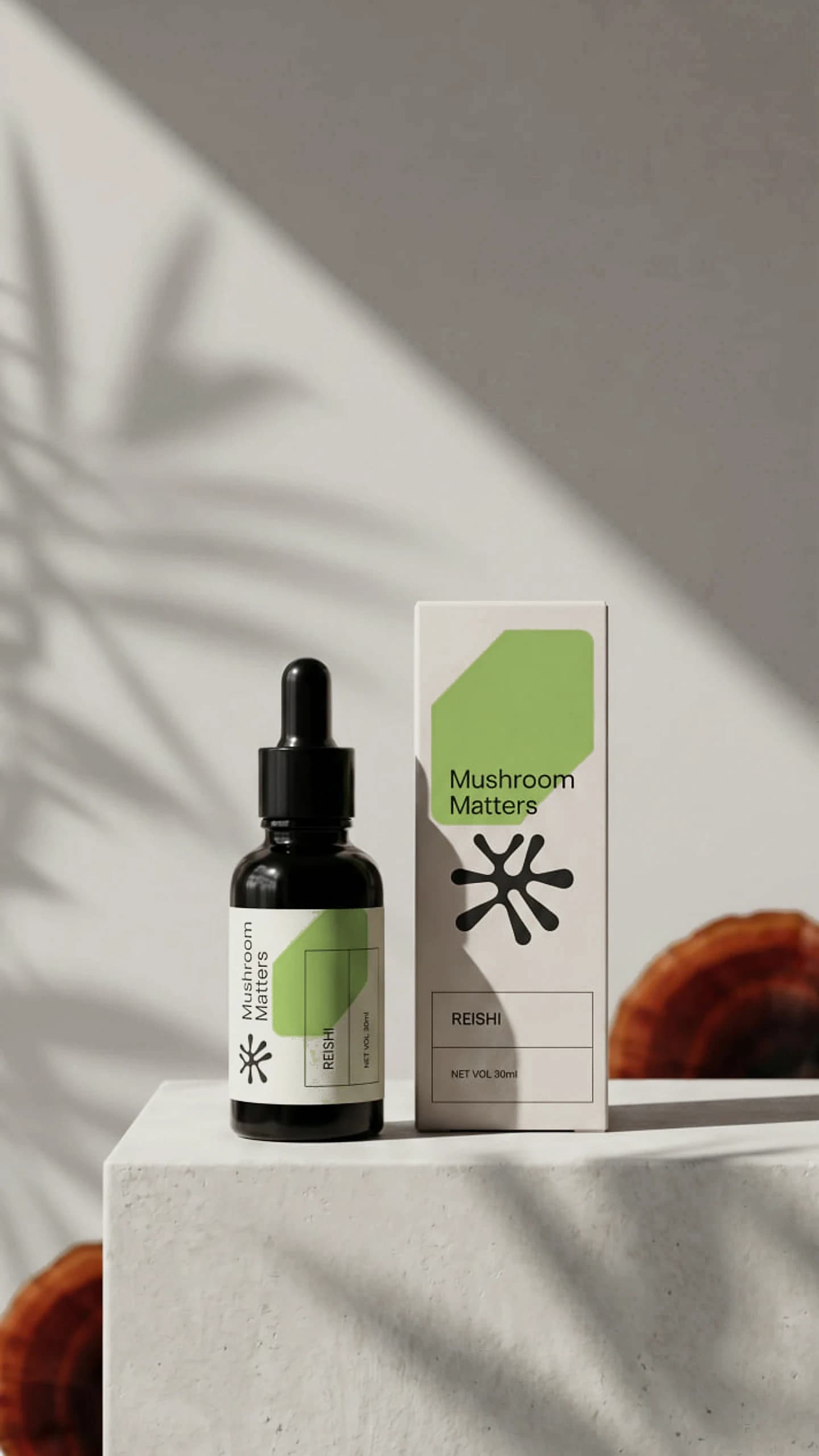
Mushroom Matters is the local side of this comparison, so here are our facts in the same checklist format. We make liquid dual extracts of three mushrooms — lion’s mane, reishi and cordyceps. The full cycle is in Yerevan: we grow the raw material ourselves (grain-free mycelium for lion’s mane, fruiting bodies for reishi and cordyceps), run both extraction stages — hot water and alcohol — filter, remove the alcohol and bottle. Nothing is outsourced, and no mushroom powder is added to the finished extract. The products carry an EAEU certificate of conformity, № RU Д-AM.РА02.В.39933/25.
A bottle is 30 ml with a dropper, costs 12,000 dram, and at the label’s 1–2 ml a day covers 15 to 30 days. Delivery is free: one to two days within Yerevan, up to a week across the rest of Armenia. We will not claim that local automatically means better — the checklist above applies to us too, and its answers are on the product pages and the production page. What local does guarantee here is that the bottle was made recently, by named people, a short drive from where it is delivered.
Will customs charge me for supplements?
Possibly, on larger orders. The rule in force since April 2024 for parcels into Armenia — stated on iHerb’s own Armenia shipping page, citing the State Revenue Committee — is a duty-free threshold of €200 per shipment; above it, a 15% customs duty applies to the excess, billed separately from shipping. The EAEU revises these rules periodically (a package of e-commerce changes was adopted for introduction from July 2026), so before a big order, check the current norm with the State Revenue Committee or your carrier. A single jar of supplements rarely approaches €200; a quarterly stock-up easily can.
Are marketplace resellers safe?
Caution is justified, and not only in Armenia. In December 2023 the FDA sent Amazon a formal warning letter: products sold through its own fulfilment service as energy supplements turned out, on laboratory analysis, to contain undeclared prescription drug ingredients. That was the world’s largest marketplace policing its own shelf imperfectly. The lesson transfers: with any marketplace or reseller, what you are really trusting is the seller’s sourcing. Buying from the producer — or from a shop that can tell you exactly where the product came from — shrinks that chain of trust to one link.
How do parcel forwarders work?
Services like ONEX and Globbing give you a warehouse address abroad — in the US, Europe, sometimes China. You order to that address as if you lived there; the forwarder receives the parcel, flies it to Armenia with its consolidated shipments, clears it through customs and hands it to you at a pickup point, a locker or your door. The fee is usually per kilogram, so light, expensive items travel cheapest. For iHerb specifically, check the delivery options on the site first: since ONEX already appears among iHerb’s listed carriers for Armenia, the direct route may turn out simpler than routing the same box through a warehouse address yourself.
The short version
Order from iHerb when you need its selection or a specific brand — and accept the wait, the shipping fee and the customs arithmetic as the price of that selection. Look at what is made nearby when you need the mushroom itself, soon, without logistics layered on top. And whichever shelf you end up buying from, run the five checklist questions first: species and raw material, extraction, composition, the manufacturer’s name, and a conformity document. They take five minutes and work in any currency.
Read next
Sources
From the shop
Comments
Leave a comment or ask a question.